Experiences
California experiences for UK travellers
California offers more variety of experience than most countries. Here is how to make the most of it — from the national parks to the beaches, the wine country to the wildlife, the film locations to the things most visitors never find.
National parks
California's national parks are among the greatest in the world, and they are genuinely incomparable to anything available in the UK or most of Europe. Do not treat them as a box to tick on the way to somewhere else — they deserve proper time.
Yosemite
The valley floor is one of the most extraordinary landscapes on earth. El Capitan and Half Dome rise thousands of feet from the valley floor, and the scale of them seen in person is something photographs cannot communicate. Allow at least two nights, preferably three.
The Mist Trail to Vernal Fall and Nevada Fall is the best hike for most visitors — strenuous, spectacular, and manageable for anyone with a reasonable level of fitness. Bridalveil Fall is worth the short walk from the car park. Yosemite Falls, the tallest waterfall in North America, is visible from the valley floor without hiking at all.
Glacier Point — accessible by road in summer, by snowshoe in winter — gives a view of the entire valley that takes your breath away. Go at sunset if you can.
Every February, Horsetail Fall on El Capitan is illuminated by the setting sun and glows deep orange — the Firefall. The window is roughly two weeks. It is entirely weather dependent. We know where to stand and when to be there.
Sequoia
The General Sherman Tree is the largest living thing on earth by volume. Standing next to it recalibrates your sense of scale in a way that is genuinely difficult to describe. The Congress Trail — a loop through the Giant Forest — passes multiple enormous sequoias and is one of the finest walks in California.
Sequoia is less visited than Yosemite and feels wilder for it. If you are combining both parks, allow at least two nights in each.
Grand Canyon
The South Rim is four hours from Las Vegas and worth every minute of the drive. The canyon is one of those places that exceeds all expectations — the scale and the colour are simply beyond what any photograph can convey.
The rim trail is accessible to everyone. Hiking into the canyon is a more serious undertaking — the South Kaibab Trail down to the Colorado River and out via Bright Angel is one of the great hikes in North America, but it requires fitness, preparation, and a very early start. Phantom Ranch at the bottom, accessible by foot or mule, requires reservations made up to a year in advance via lottery.
El Tovar Hotel on the rim is one of the great historic hotels of the American West — perched right on the canyon edge, built in 1905, and worth booking well in advance for the room views alone.
Death Valley
The hottest place on earth is also one of the most beautiful, in the early morning light when the salt flats and canyon walls shift through colours that have no names in English. Visit in spring or autumn — summer temperatures regularly exceed 50°C and are genuinely dangerous. Badwater Basin, the lowest point in North America, is the obvious stop. Zabriskie Point at sunrise is extraordinary.
Beaches and coastline
California's coastline runs for nearly 900 miles and is one of the most varied in the world — from the wild, fog-bound shores of Point Reyes to the reliably sunny beaches of Orange County.
Orange County
Newport Beach, Huntington Beach and Laguna Beach are the holy trinity of Southern California beach towns. Newport is the most upscale, Huntington is the most quintessentially surf-culture California, and Laguna is the most artistic and boutique. All three are excellent and all three are within 45 minutes of LAX.
Victoria Beach in Laguna has a privately built stone tower — the Pirate Tower — visible only at low tide. One of those California curiosities that rewards the visitor who goes looking.
Newport Beach is famously the setting for Arrested Development. The OC, which introduced a generation of British teenagers to the idea of California as a way of life, was set in Newport and Laguna.
Malibu
The celebrity homes along Malibu Road and Carbon Beach — known locally as Billionaire's Beach — are worth a slow drive. The beach itself is public (all California beaches are legally public) even if the houses suggest otherwise. Point Dume is one of the most dramatic headlands in Southern California.
Big Sur
Not a beach destination in the traditional sense — the cliffs are too steep and the water too cold for swimming — but the coastline is extraordinary. McWay Falls drops directly onto the beach below. Pfeiffer Beach has purple sand from manganese garnet in the rock. Bixby Bridge, the most photographed bridge in California, is worth stopping for.
Wildlife
California offers wildlife encounters that most British visitors don't expect. The Pacific coastline is particularly remarkable.
Whale watching and dolphins
Newport Beach offers some of the most reliable dolphin sightings in California. Common dolphins ride the bow waves of whale watching boats daily — sightings are almost guaranteed. Grey whales migrate past the California coast from December to April, heading south to Baja and north again in spring. Blue whales, the largest animals ever to have lived on earth, are seen off the California coast in summer.
Elephant seals
The Elephant Seal Vista Point just north of San Simeon, on the PCH between Hearst Castle and Big Sur, has hundreds of elephant seals hauled out on the beach year-round. Completely wild, completely accessible, and one of those unexpected California experiences that stays with you.
Bears and wildlife in the national parks
Black bears are present throughout Yosemite and Sequoia. They are not typically aggressive, but they are powerful, fast and very interested in food. Store all food in the bear boxes provided at campsites and car parks — never leave food in your car. Maintain a safe distance. Do not approach, feed or photograph from close range.
Marine wildlife
California and the broader Pacific coast offer some of the best whale and dolphin watching in the world — and most British visitors have no idea. The variety of species, the accessibility of the tours, and the near-guaranteed sightings make this one of the most rewarding experiences on any California itinerary.
Newport Beach — dolphins and whales year-round
Newport Beach is one of the finest whale watching locations on the California coast. Common dolphins ride the bow waves of whale watching boats in large pods — sightings are essentially guaranteed on any given day, year-round. Watching a hundred dolphins surfing the bow wave of a boat while the California coastline stretches behind them is one of those experiences that stays with you.
Grey whales migrate southward past Newport Beach from December to February, heading to their breeding lagoons in Baja California. They return northward from March to May — the northward migration often includes mothers with calves, which makes for extraordinary viewing.
Blue whales — the largest animals ever to have lived on earth, up to 30 metres long — are seen off the California coast from June to October. Newport Beach and Dana Point are excellent departure points for blue whale watching during this season.
Humpback whales are seen year-round off California but are most common from April to November. They are the acrobats of the whale world — breaching, tail-slapping and spy-hopping in a way that grey and blue whales rarely do.
Harbour seals and California sea lions are permanent residents of the Newport Beach area and are regularly seen from the boat and from the shore around the Balboa Peninsula.
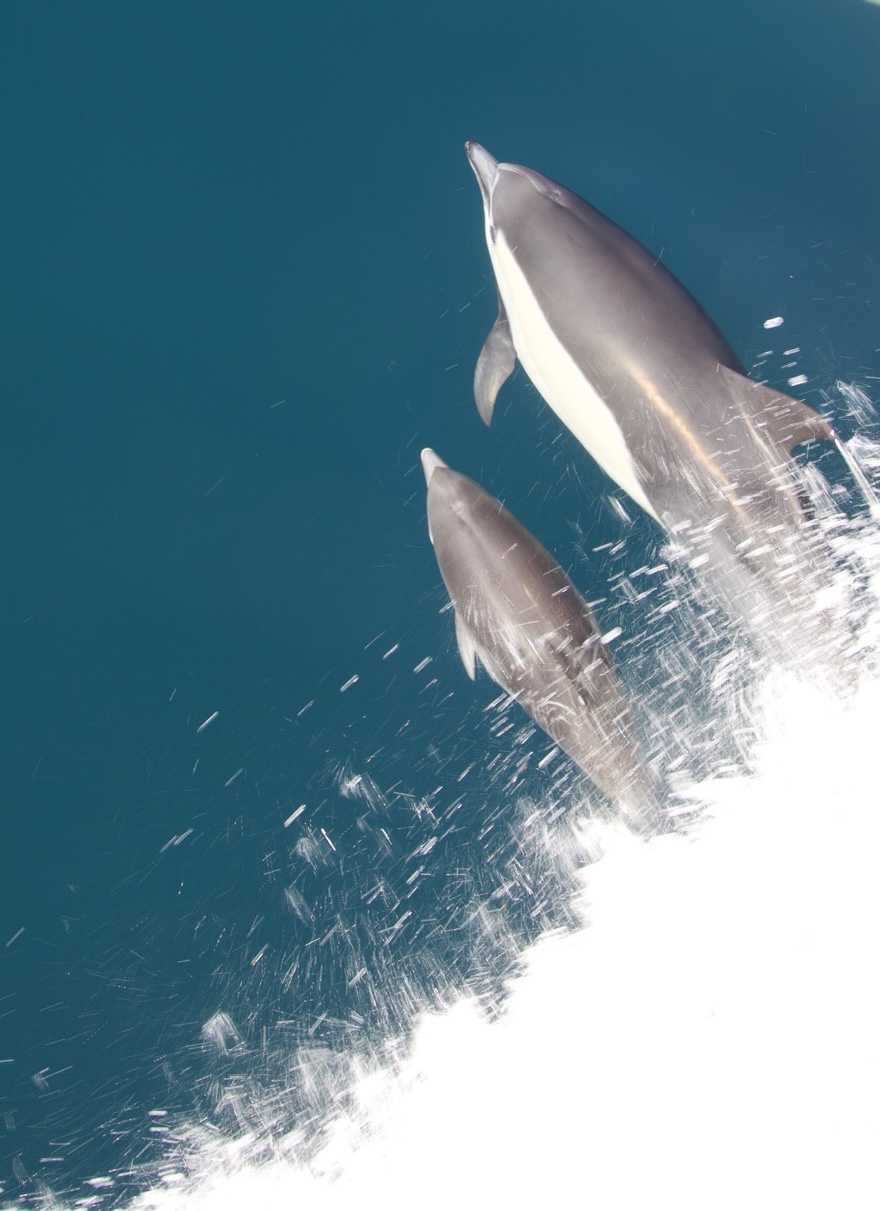
Newport Beach, California
Dolphins — almost guaranteed, any day of the year
Common dolphins travel in large pods and seek out the bow waves of boats — on a whale watching trip out of Newport Beach you will typically find yourself surrounded by dozens to hundreds of dolphins riding alongside the hull. It is one of those experiences that surprises even seasoned travellers.
Blue whales, grey whales and humpbacks are all seasonal visitors to these waters. But the dolphins are there every single day, year-round, regardless of season.
Monterey Bay — one of the world's great marine habitats
Monterey Bay is a National Marine Sanctuary and one of the most biodiverse marine environments on earth. The Monterey Canyon — an underwater canyon as deep as the Grand Canyon — brings cold, nutrient-rich water to the surface, supporting extraordinary concentrations of marine life.
Humpback whales are common in Monterey Bay from April to November. Blue whales are seen in summer. Risso's dolphins, Pacific white-sided dolphins and common dolphins are all regular. Sea otters float on their backs in the kelp beds just offshore — one of the defining California wildlife images and completely accessible from the Monterey waterfront.
Pacific Northwest — orcas
If orcas are on your list, the Pacific Northwest is the place. The San Juan Islands in Washington State — reachable by ferry from Anacortes, north of Seattle — are home to resident orca pods that have been studied for decades. Sightings are not guaranteed but are common from May to September. The scenery — forested islands, snow- capped mountains, cold clear water — is extraordinary in its own right.
Victoria, British Columbia is another excellent base for orca watching. Transient orcas (which feed on marine mammals rather than fish) are seen year-round in the Salish Sea.
The Pacific Northwest is a natural extension of a California trip for those with three weeks or more — fly into Los Angeles, drive or fly north through Oregon to Washington, and return from Seattle.
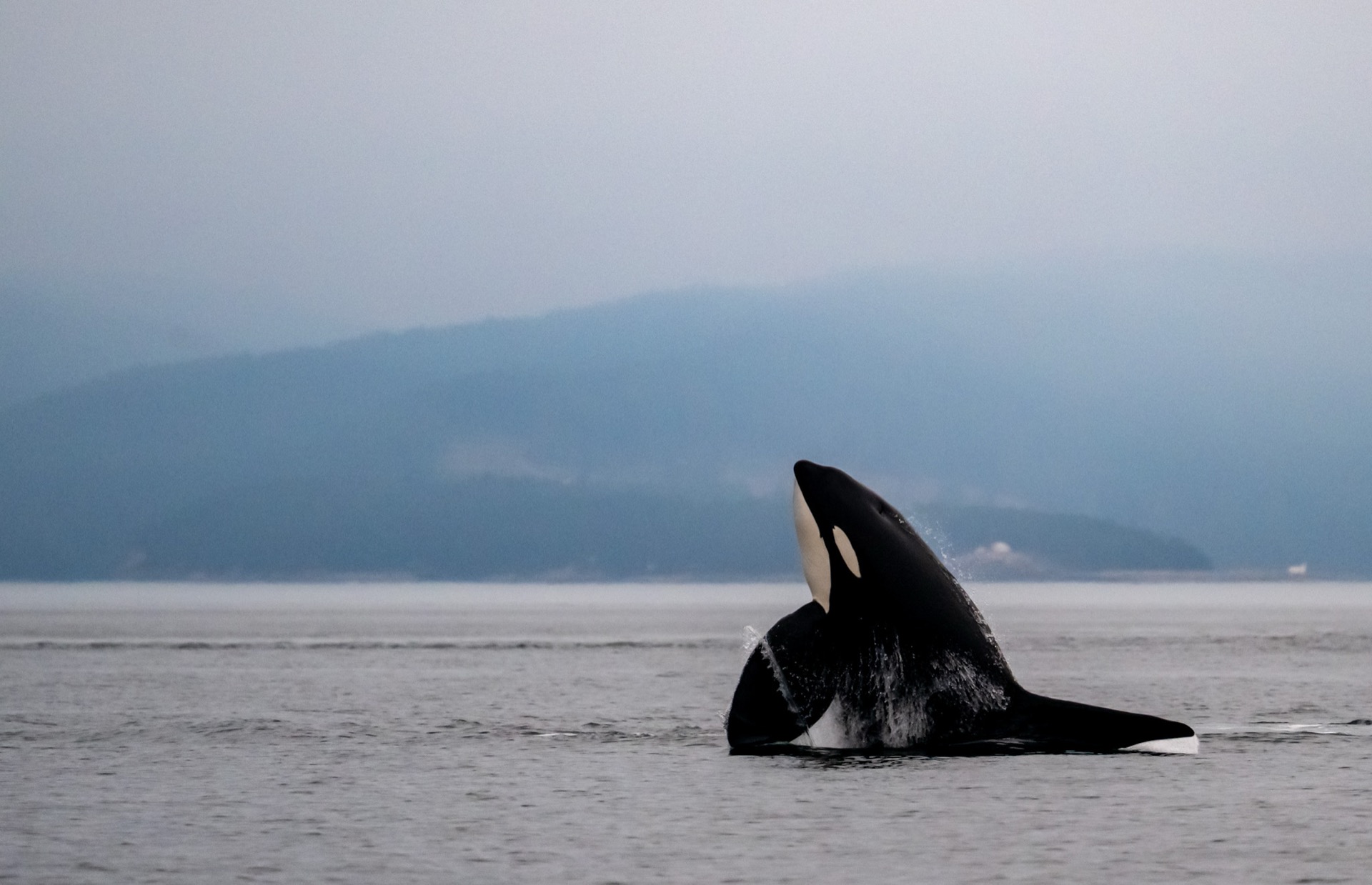
San Juan Islands, Washington State
Orcas — the Pacific Northwest's signature wildlife encounter
The resident orca pods of the Salish Sea are among the most studied and most photographed in the world. Watching an orca breach — six tonnes of black and white launching clear of the water — is one of those wildlife moments that no photograph fully prepares you for.
The San Juan Islands are a ferry ride from the Washington mainland and worth a night or two in their own right — forested, quiet, with some excellent small restaurants and the kind of Pacific Northwest scenery that is completely unlike anything in California.
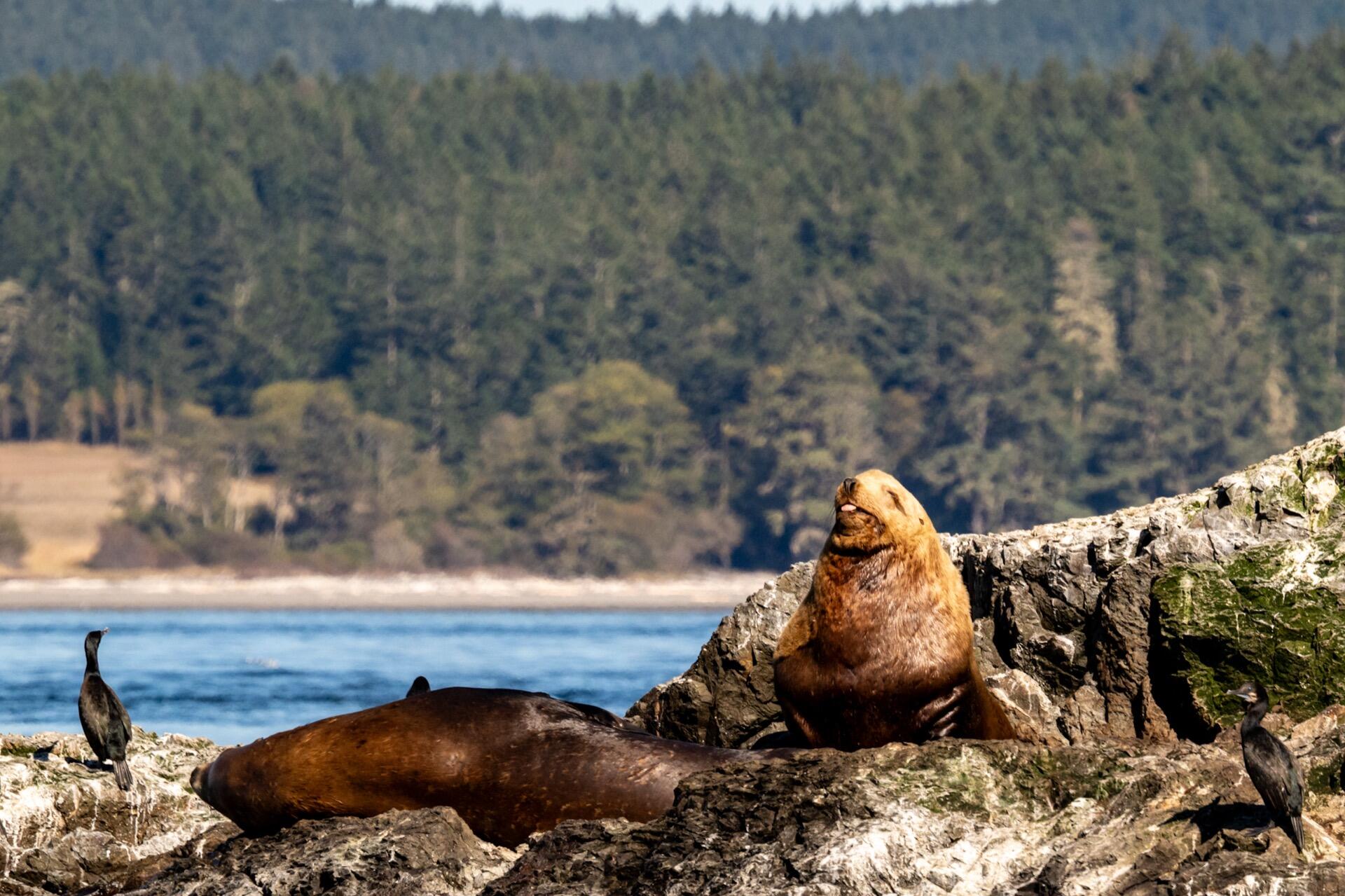
San Juan Islands, Washington State
Sea lions — part of the same Pacific Northwest trip
This photograph was taken on the same orca watching trip in the San Juan Islands. Steller sea lions haul out on rocks and channel markers throughout the islands — large, loud and completely indifferent to passing boats.
On California whale watching trips out of Newport Beach and Monterey, California sea lions are a regular sighting before you even reach open water — hauled out on harbour buoys and rocks just outside the marina.
Hawaii — humpback whales
Humpback whales migrate to the warm waters around the Hawaiian Islands from November to May to breed and give birth. Maui is the epicentre — the AuAu Channel between Maui, Lanai and Molokai is one of the most important humpback breeding grounds in the North Pacific. Sightings from the shore are common; boat tours get you close enough to hear them breathing.
Hawaii combines naturally with a California trip as a two-centre holiday — a week in California followed by a week in Hawaii, or the reverse. Inter-island flights are short and inexpensive.
Elephant seals
The Elephant Seal Vista Point just north of San Simeon — on the PCH between Hearst Castle and Big Sur — has hundreds of elephant seals hauled out on the beach year-round. Enormous, prehistoric- looking animals, completely wild and completely indifferent to visitors. One of those unexpected California moments that stays with you long after the trip.
Fauna — birds, bears and the national park wilderness
California's wildlife extends well beyond the ocean. The national parks and wild spaces of the state support an extraordinary range of fauna — much of it visible to any visitor who spends time away from the car.
Bears
Black bears are present throughout Yosemite, Sequoia and the Sierra Nevada. They are not typically aggressive toward humans, but they are powerful, fast, highly intelligent and extremely interested in food. Store all food in the bear boxes provided at campsites and car parks. Never leave food in your car — bears have learned to recognise cool boxes and bags through windows and will break in to reach them. Maintain a safe distance and never approach or feed one.
Seeing a bear in the wild — at a safe distance, going about its business — is one of the genuinely memorable experiences Yosemite offers. They are seen regularly in the valley, particularly in autumn when they are foraging heavily before winter.
Birds
California is exceptional for birdwatching, though you don't need to be a birder to appreciate it. Anna's hummingbirds are year-round residents throughout coastal California — iridescent, fast and surprisingly bold. If you sit still near flowering plants almost anywhere in Southern California, one will likely appear.
Bald eagles nest around Lake Tahoe and are seen throughout the Sierra Nevada. California condors — the largest flying bird in North America, with a wingspan of nearly three metres — were brought back from the brink of extinction and are now seen regularly at the Grand Canyon South Rim and in Big Sur. Spotting one is genuinely special.
Brown pelicans cruise the California coastline in formation, barely clearing the wave tops. Great blue herons stand motionless in coastal lagoons. Peregrine falcons nest on El Capitan in Yosemite. The birdlife rewards attention even from non-specialists.
Mountain lions
Mountain lions — also called cougars or pumas — are present throughout California but are extremely rarely seen. They are secretive, nocturnal and actively avoid humans. In decades of hiking California's national parks and wild spaces, most experienced outdoors people never see one. The risk of an encounter is vanishingly small and should not deter anyone from hiking.
If you do encounter one: do not run, make yourself appear large, make noise, and back away slowly. Attacks on humans are exceedingly rare. The parks post current wildlife sighting information at visitor centres.
Wine country
Napa Valley and Sonoma County produce some of the finest wines in the world, and a day in wine country is one of the great California experiences. The landscape — vine-covered valleys, wooden barns, mountain backdrops — is as beautiful as the wine.
Hire a driver or join a wine tour rather than driving yourself. The roads are narrow and the tastings are generous. A day with a driver through the Napa Valley is one of the most enjoyable ways to spend a day in Northern California.
The Santa Ynez Valley around Solvang — made famous by the film Sideways — produces excellent Pinot Noir and is less crowded than Napa. Worth a stop on the PCH drive north.
Theme parks
Disneyland in Anaheim — the original, opened by Walt Disney in 1955 — is a different experience from Disney World in Florida. Smaller, more manageable, and with a historical weight that the Florida resort lacks. It is worth visiting for the nostalgia alone.
Universal Studios Hollywood gives access to the working studio lot as well as the theme park — the studio tour is genuinely interesting for anyone who cares about film. Knott's Berry Farm is underrated and significantly less crowded than either Disney or Universal.
Film and television locations
California is, in many ways, the setting for the entire twentieth century of American storytelling. The locations are everywhere.
Newport Beach and Laguna Beach for Arrested Development and The OC. Miramar in San Diego for Top Gun. The Griffith Observatory for Rebel Without a Cause and dozens of films since. The Venice Beach boardwalk, the Santa Monica Pier, the streets of downtown LA.
We can build an itinerary around specific filming locations for guests who want to structure their trip this way — it is a surprisingly effective approach that tends to take you to parts of cities that standard tourist routes miss.
Hidden California
The Winchester Mystery House in San Jose — Sarah Winchester's labyrinthine mansion, built continuously for 38 years, with staircases to nowhere and doors that open onto walls. The Mystery Spot near Santa Cruz, where the laws of physics appear to be suspended. Devils Postpile near Mammoth Lakes, geometric basalt columns that look entirely man-made. Mono Lake east of Yosemite, with its alien tufa towers.
These are the Atlas Obscura end of California — the things that don't appear in standard guidebooks and that most visitors drive past without knowing they exist. We know where they are and when they're worth visiting.