Film locations
The Rock (1996)
About this film
The Rock is one of the few action films where the locations do as much work as the explosions. Michael Bay shot on and around Alcatraz Island, through the streets of San Francisco and across the city’s most recognisable landmarks in 1995, and the result is a film that treats the entire city as a set piece. The car chase alone covers more of San Francisco’s geography than most tourist itineraries. Every major location in the film is real, still standing and still visitable.
Alcatraz Island
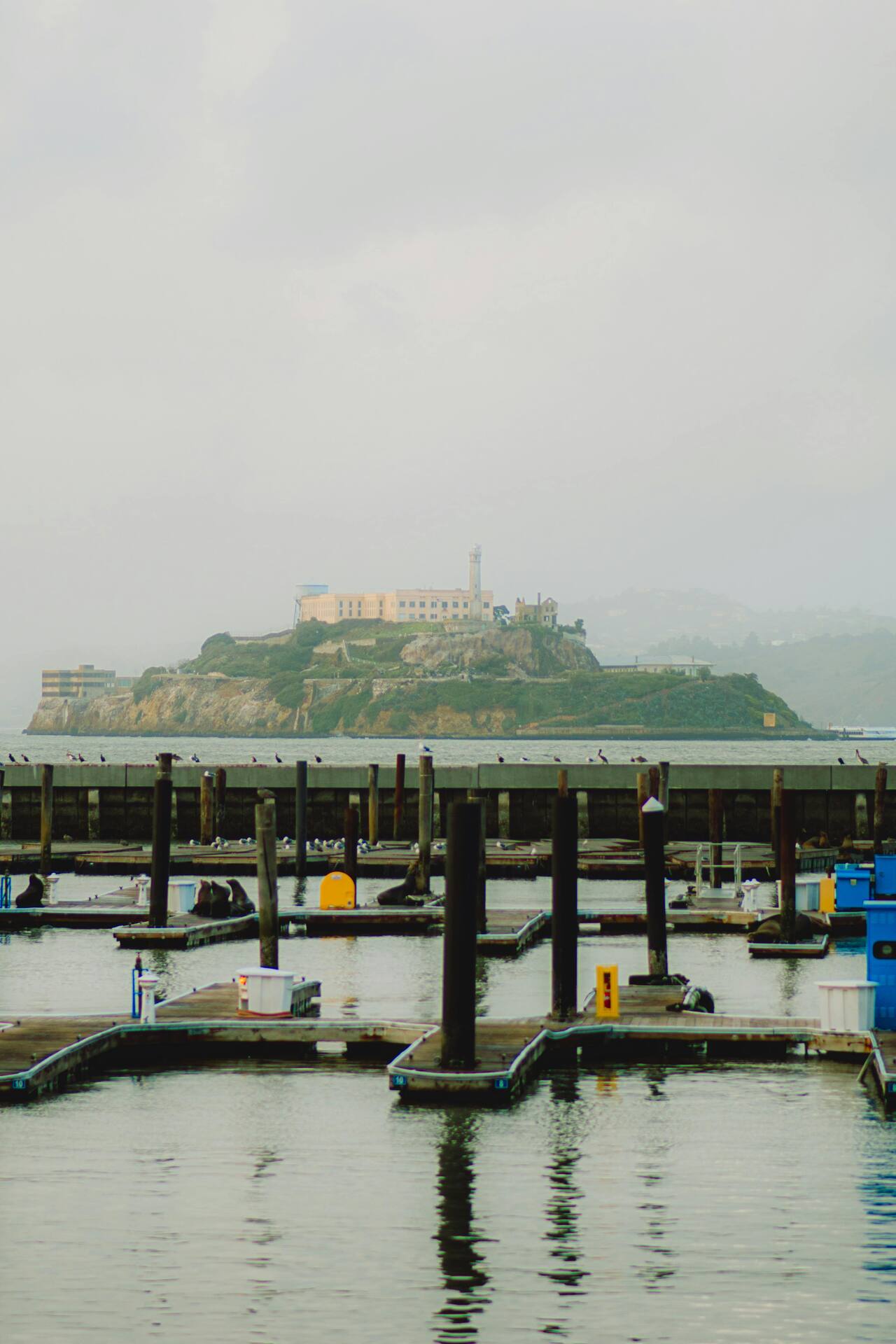
The film’s centrepiece. Alcatraz — the former federal penitentiary on a twelve-acre island in the middle of San Francisco Bay — is where General Hummel takes his hostages and where Mason and Goodspeed infiltrate. Bay filmed exterior sequences on the island itself, though the interior cell block scenes were largely shot on sets. The real Alcatraz is more atmospheric than any set could replicate — the crumbling cell house, the exercise yard with its views of the city across the water, the lighthouse and the warden’s ruined house all appear in the film.
Alcatraz operated as a federal prison from 1934 to 1963, housing inmates including Al Capone and Robert Stroud. The island became part of the Golden Gate National Recreation Area in 1972 and is now one of the most visited sites in the National Park system. The audio tour of the cell house, narrated by former inmates and guards, is one of the best interpretive experiences in any American national park.
Visiting: Alcatraz is reached by ferry from Pier 33 on the Embarcadero. Book through Alcatraz City Cruises well in advance — tickets sell out weeks ahead, especially in summer. The night tour is the best experience if available. Allow three to four hours for the ferry crossing and the island visit. Dress warmly — the bay is cold and windy even in summer.
Coit Tower and the car chase
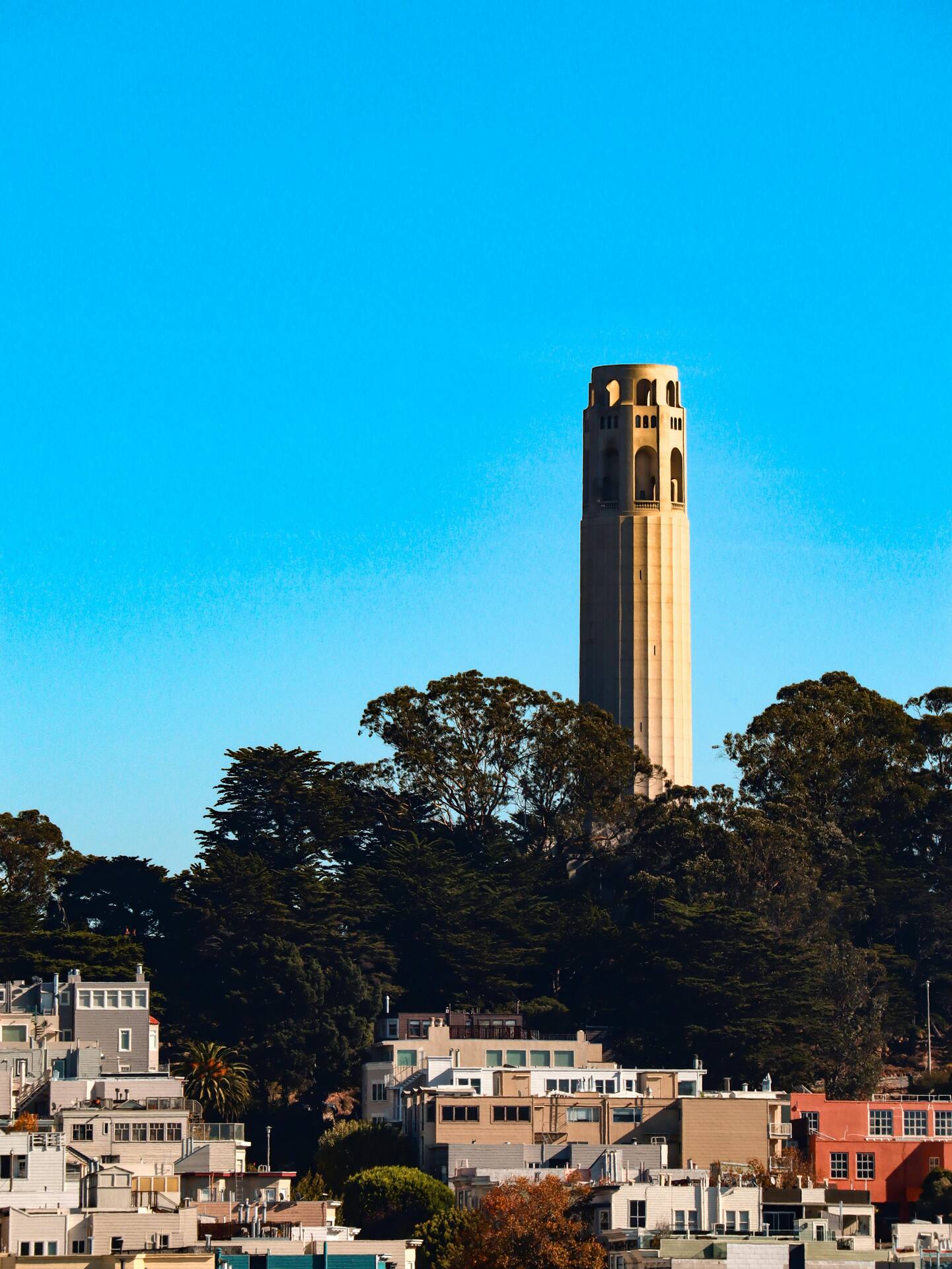
The car chase sequence — one of the most destructive in film history — runs through the streets of North Beach, Russian Hill and Telegraph Hill. The chase passes Coit Tower on Telegraph Hill, the 210-foot Art Deco column built in 1933 as a memorial to San Francisco firefighters. The tower gives 360-degree views of the bay, the bridges, Alcatraz and the city from its observation deck. The murals inside the base, painted in 1934 by twenty-five artists under the Public Works of Art Project, are worth seeing in their own right.
The streets below Coit Tower — the steep, narrow roads that wind through North Beach — are exactly as they appear in the film. The Filbert Steps and the Greenwich Steps, the wooden staircases that climb Telegraph Hill through gardens and wild parrots, connect the waterfront to the tower and are among the most extraordinary urban walks in the United States.
Visiting: Coit Tower is open daily. The elevator to the observation deck has a small fee. The murals on the ground floor are free. Walk up via the Filbert Steps from the Embarcadero for the full experience — the climb is steep but the gardens and the views are exceptional.
Palace of Fine Arts
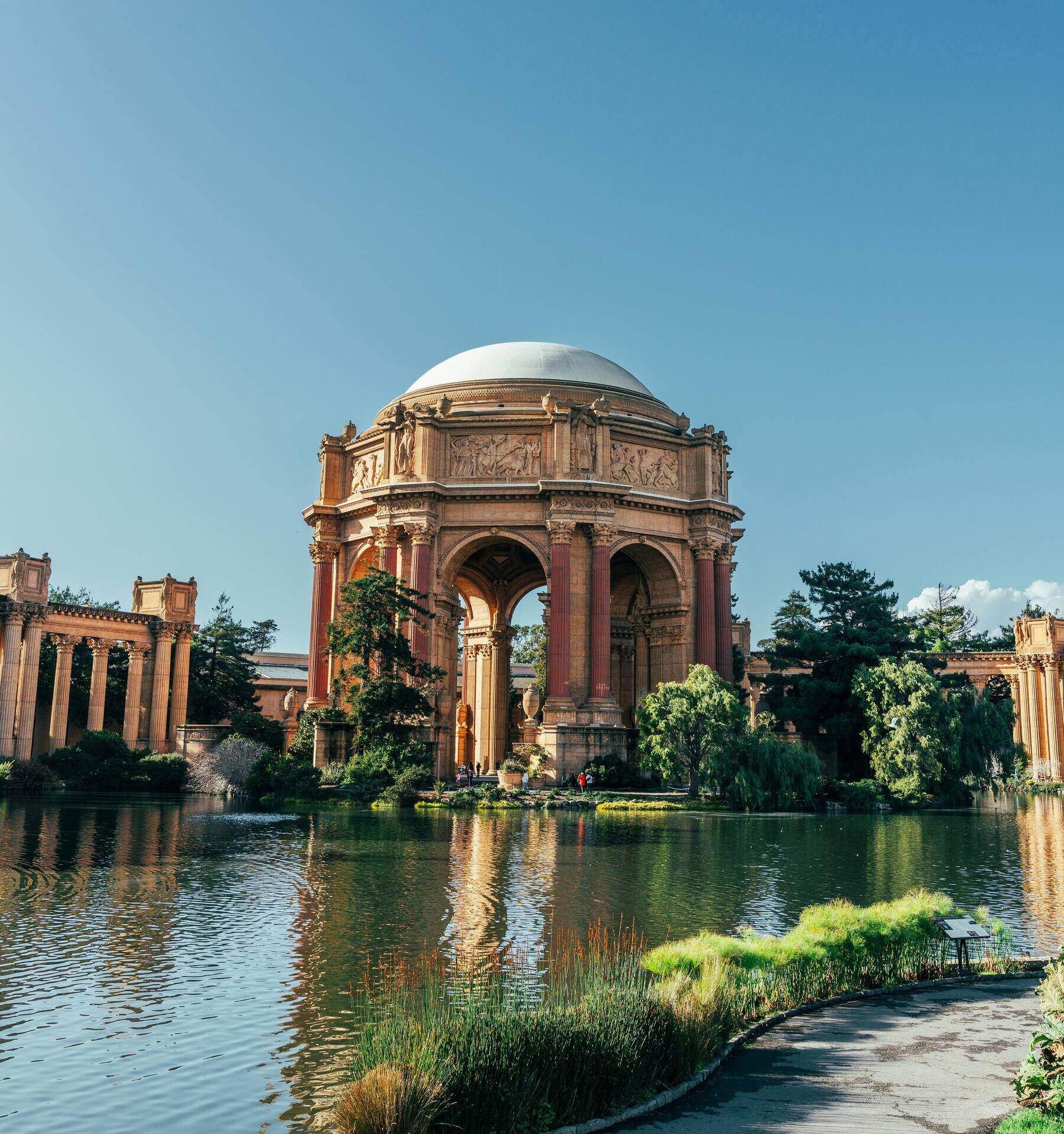
The Palace of Fine Arts in the Marina District appears in the film as a backdrop to several sequences. The structure — a Roman rotunda and colonnaded walkway set around a reflective lagoon — was originally built for the 1915 Panama-Pacific International Exposition and was the only building from the fair to survive. It was rebuilt in concrete in the 1960s and restored again in 2009. The setting is one of the most photographed in San Francisco and the scale of the rotunda is genuinely surprising in person.
The Palace sits in the Marina District, a few blocks from the waterfront and within walking distance of Crissy Field and the Golden Gate Bridge approach. The lagoon is home to ducks and swans and the park around it is a popular picnic spot.
Visiting: The Palace of Fine Arts is free and open daily. The grounds and lagoon are accessible at all times. The best light for photography is late afternoon when the rotunda catches the western sun. Parking is available on the surrounding streets or combine it with a walk along Crissy Field to the Golden Gate Bridge.
Fairmont Hotel
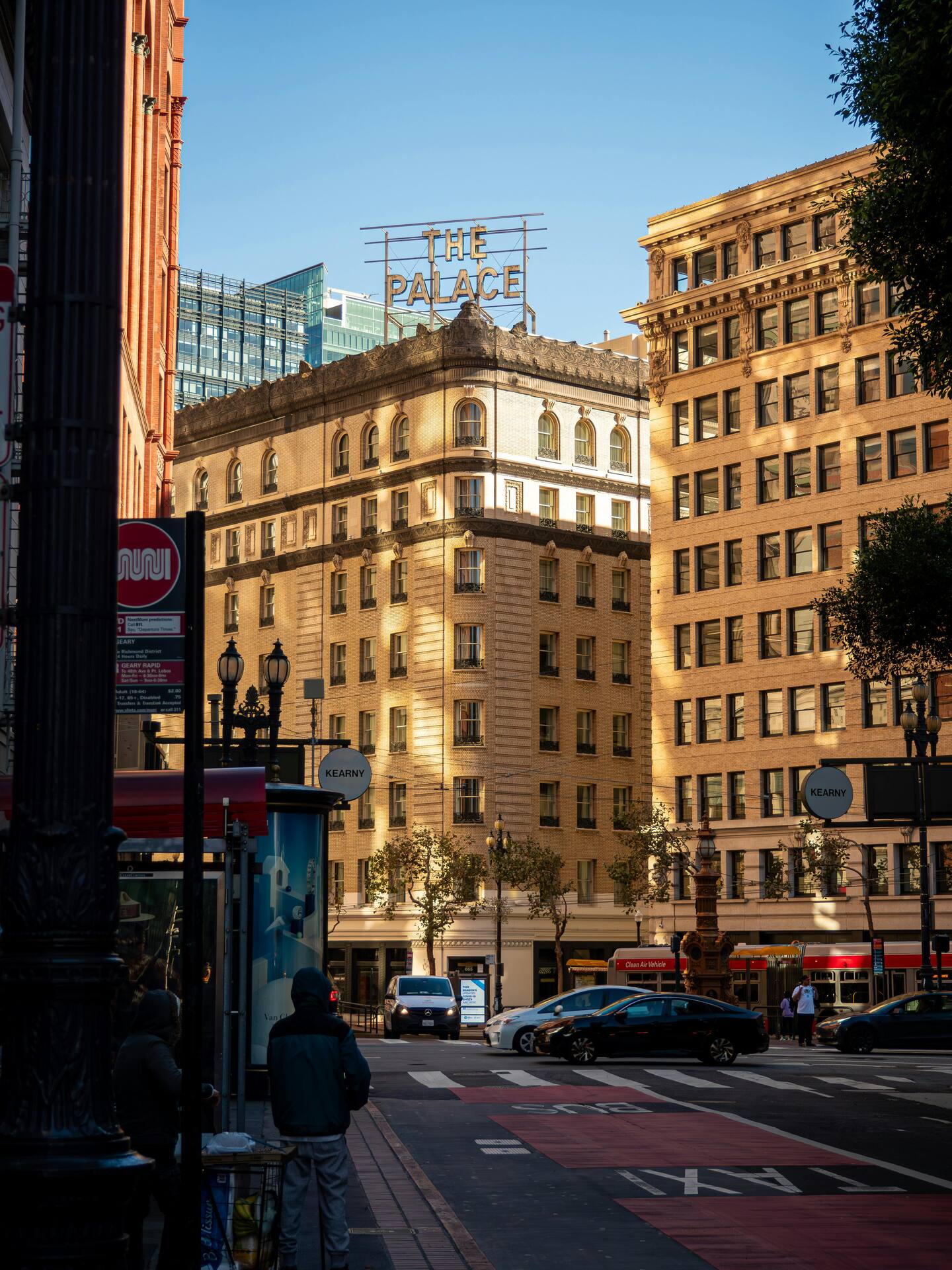
The Fairmont San Francisco on Nob Hill is where several of the film’s interior sequences were set. The hotel — opened in 1907, destroyed in the earthquake and fire that same year, rebuilt and reopened in 1907 — sits at the top of Nob Hill with views over the city in every direction. The lobby, with its marble columns and grand staircase, is one of the great hotel interiors in the United States. The Tonga Room, the hotel’s tiki bar built around an indoor pool with simulated rainstorms, is one of the most singular bars in San Francisco.
Nob Hill itself is the most concentrated collection of grand architecture in the city — the Fairmont, the Mark Hopkins InterContinental, the Pacific-Union Club and Grace Cathedral are all within a block of each other. The California Street cable car runs directly past the Fairmont’s front door.
Visiting: The Fairmont is open to non-guests for the lobby, restaurants and the Tonga Room. The Tonga Room is open Wednesday to Sunday — reservations recommended. Take the California Street cable car from the Financial District to arrive in the most San Francisco way possible.
San Francisco streets
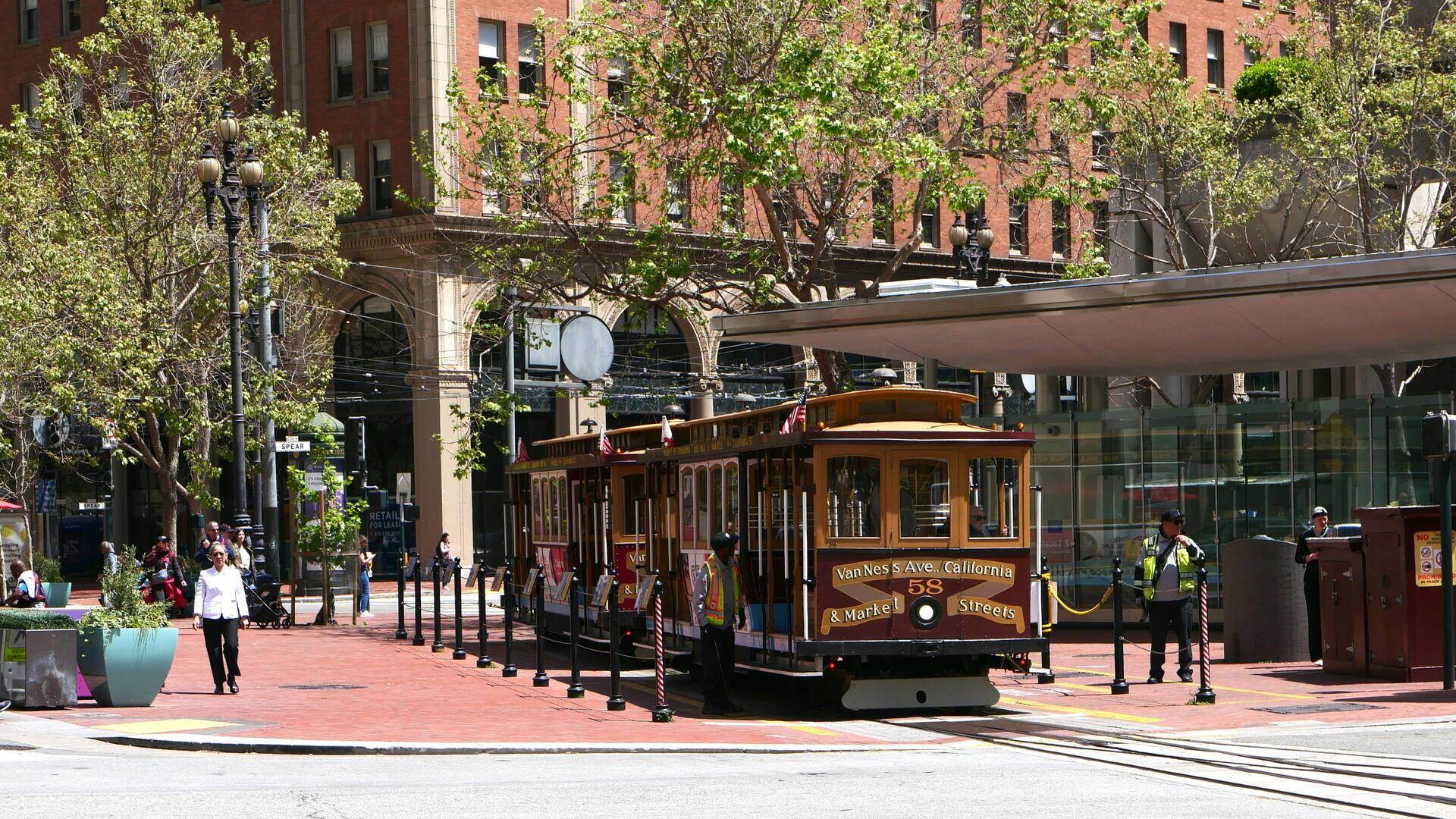
The car chase runs through real San Francisco streets — down the hills, through intersections, over the cable car tracks. The specific geography of the chase is compressed for dramatic effect (no real route connects the locations in the order shown) but every individual street is real. The steep grades, the cable car lines embedded in the pavement, the Victorian houses flashing past — this is San Francisco’s geography used as an action set.
The streets of San Francisco are themselves the attraction. The city’s forty-three hills create a driving and walking experience unlike any other American city. Lombard Street, the famously crooked block between Hyde and Leavenworth, is a few blocks from the chase route. The cable cars — the last manually operated cable car system in the world — run on three lines and are a working transit system, not a tourist ride.
Visiting: The cable car lines run from around 7am to 10pm daily. Buy a Muni Visitor Passport for unlimited rides or pay per trip at the turnarounds. The Powell-Hyde line gives the best views, passing through Russian Hill and ending at Aquatic Park near Fisherman’s Wharf. Avoid the queues at the Powell Street turnaround by boarding at a mid-route stop.
Practical information
A full Rock locations day in San Francisco works well as a loop. Start with the Alcatraz ferry from Pier 33 in the morning (book in advance). After returning, walk along the Embarcadero to Telegraph Hill and climb the Filbert Steps to Coit Tower. From Coit Tower, walk or drive through North Beach to the Fairmont on Nob Hill. Continue west to the Palace of Fine Arts in the Marina District, then walk along Crissy Field for views of the Golden Gate Bridge and Alcatraz together.
San Francisco is compact enough that a car is optional for this itinerary — Muni buses and cable cars connect most of the locations. Parking is expensive and scarce in North Beach and Nob Hill. The weather is unpredictable year-round — layers are essential, and fog can roll in at any time even in summer.