National Park
Grand Canyon National Park
The Grand Canyon is one of those places where the reality defeats the expectation. You think you know what it looks like — you have seen the photographs a thousand times — and then you walk to the rim and it is incomprehensibly larger, deeper and more complex than any image prepared you for. A mile deep, up to eighteen miles across and 277 miles long, carved by the Colorado River over six million years.
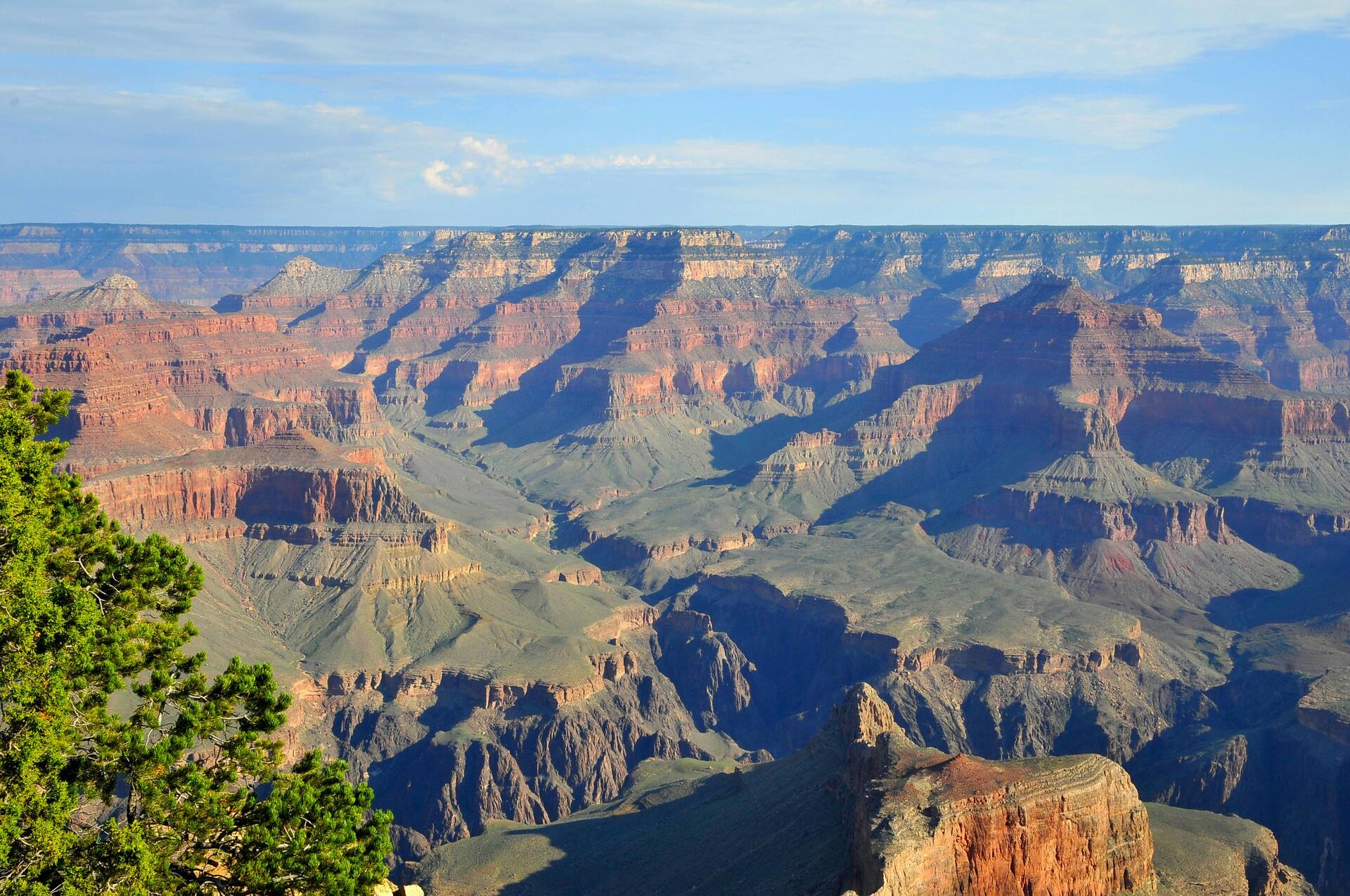
South Rim
The South Rim is where the vast majority of visitors go and for good reason — it is open year-round, has the best infrastructure and offers the most accessible views. The rim trail runs for 13 miles along the edge with viewpoints every few hundred yards, each one different as the light and the canyon geometry shift. Mather Point, the first viewpoint most visitors reach, is dramatic enough to stop people in their tracks. Yavapai Point has a geology museum that explains what you are looking at.
The South Rim Village has lodges, restaurants and a general store. The Hermit Road shuttle runs along the western rim to Hermits Rest, a Mary Colter-designed rest house at the end of the road. Every stop on this shuttle offers a different angle on the canyon. The Desert View Watchtower at the eastern end, also designed by Colter, gives the widest panorama.
Bright Angel Trail
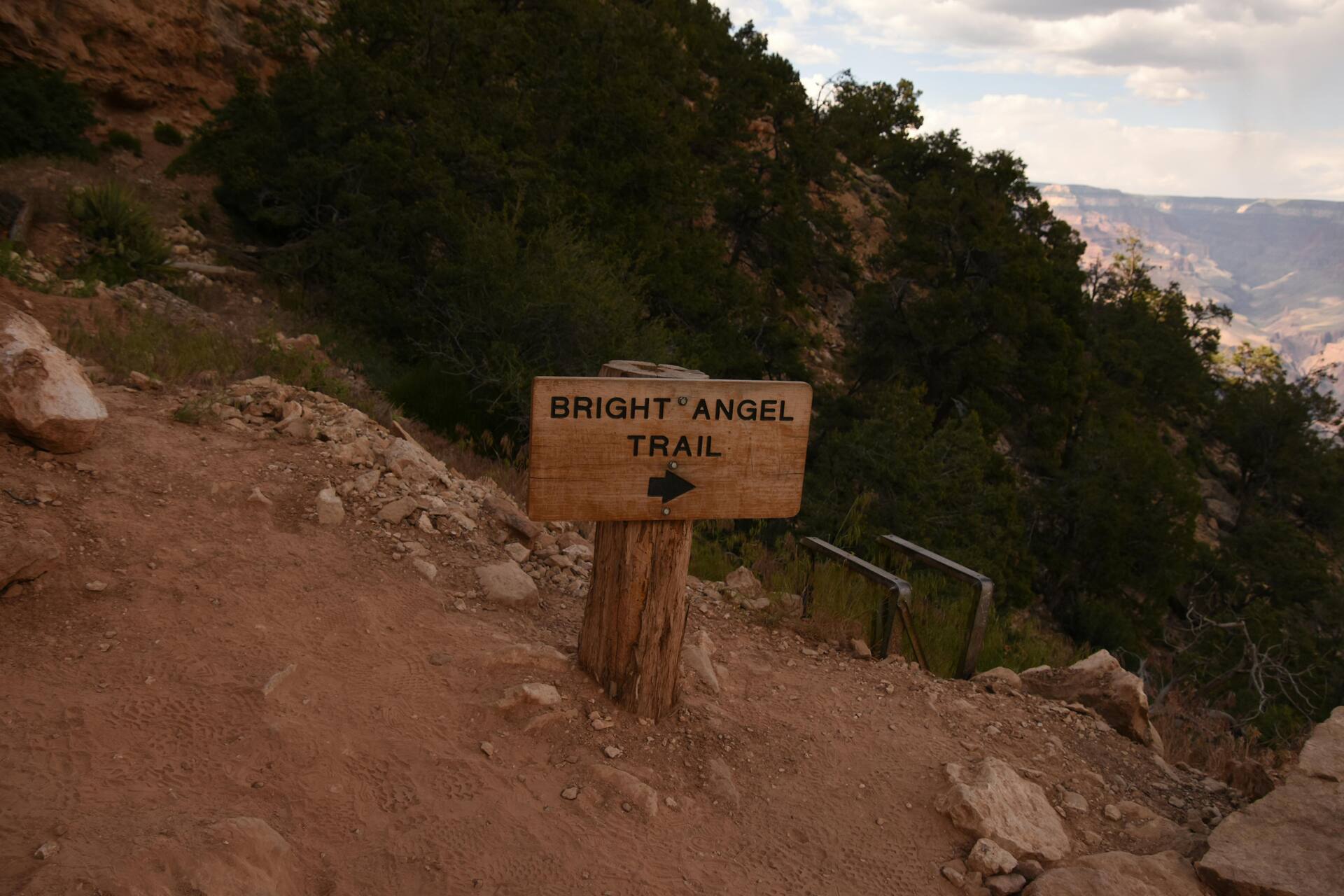
Bright Angel Trail is the most popular below-rim trail in the Grand Canyon — a steep, well-maintained path that drops from the South Rim to the Colorado River at Phantom Ranch, 4,380 feet below. The trail follows a natural fault line in the canyon wall, switchbacking down through layers of geological time. Each layer of rock represents millions of years and the interpretive signs along the trail explain what you are walking through.
The full round trip to the river is not a day hike — it is 19 miles with massive elevation change and the park service strongly advises against attempting it in a single day, especially in summer when temperatures at the bottom exceed 40 degrees Celsius. For a day hike, the turnaround points are the 1.5-Mile Resthouse or the 3-Mile Resthouse — both have water (in season) and shade, and both give a genuine sense of descending into the canyon.
Remember: the hike down is the easy part. Every step down must be climbed back up, and it takes roughly twice as long to ascend as to descend. Start early, carry more water than you think you need, and eat salty snacks — hyponatremia (low sodium from drinking too much water without salt) is a bigger risk than dehydration in the canyon.
South Kaibab Trail
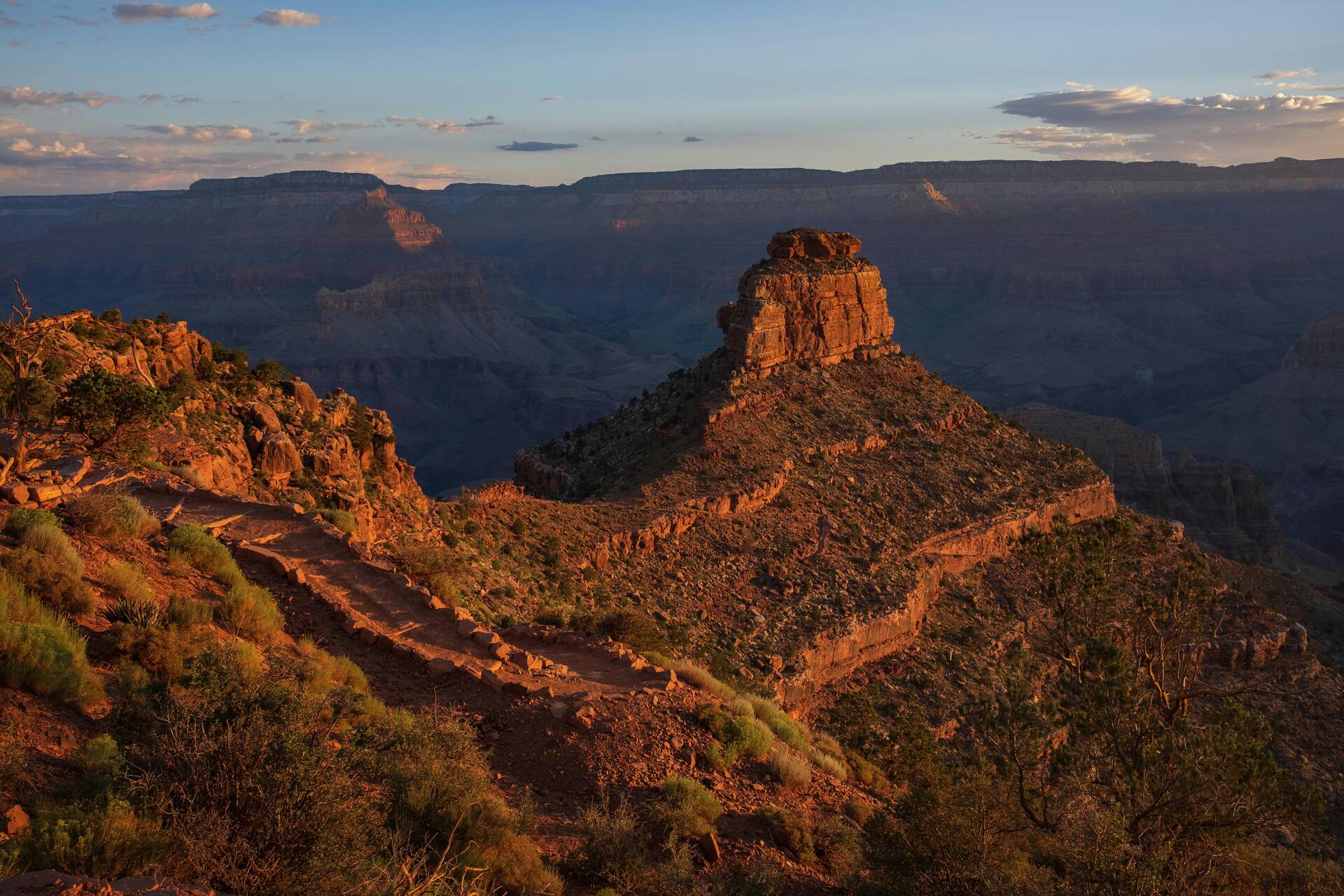
The South Kaibab Trail is steeper and more exposed than Bright Angel but the views are incomparably better — the trail follows a ridge rather than a fault line, so you are walking along a spine with the canyon dropping away on both sides. Ooh Aah Point, just 0.9 miles from the trailhead, is one of the finest viewpoints accessible by a short hike anywhere in the park. Cedar Ridge at 1.5 miles is another strong turnaround point with panoramic views.
The South Kaibab has no water and no shade. It is not the trail to descend in the heat of summer unless you are very experienced. The classic combination for rim-to-river hikers is to descend the South Kaibab (shorter, steeper, better views) and ascend the Bright Angel (longer, less steep, water available) — but this is a two-day undertaking with a night at Phantom Ranch, not a day hike.
The Colorado River
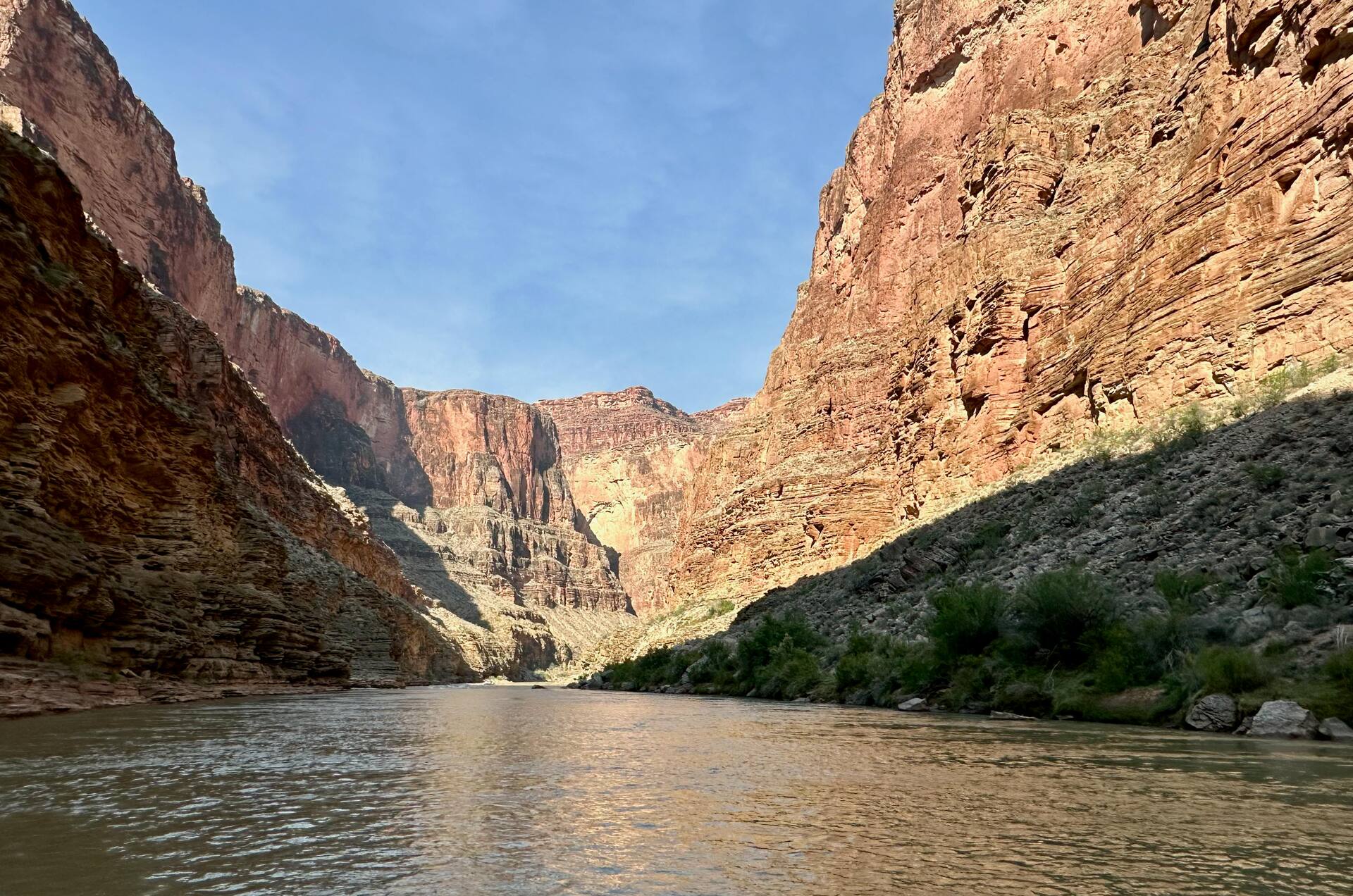
The Colorado River carved the Grand Canyon over six million years and it is still carving it. From the rim, the river is a thin green ribbon a mile below. From the bottom, the canyon walls rise so high on either side that direct sunlight reaches the river for only a few hours each day. The scale shift between the rim and the river is one of the most disorienting experiences in any natural landscape.
Rafting the Colorado through the Grand Canyon is one of the great wilderness experiences in the world. Full trips run 188 miles from Lees Ferry to Diamond Creek and take 12 to 18 days on oar-powered rafts or 6 to 8 days on motorised rafts. Shorter trips of 3 to 5 days cover the upper or lower sections. All commercial trips must be booked through licensed outfitters and the most popular trips sell out a year or more in advance. Non-commercial (private) permits are allocated by weighted lottery through the park service.
For visitors without the time or budget for a multi-day raft trip, the Bright Angel Trail to the river and back gives a taste of the inner canyon — though as a two-day hike with a night at Phantom Ranch, not a casual day trip.
Phantom Ranch
Phantom Ranch is the only accommodation below the canyon rim — a cluster of stone and timber cabins and dormitories at the bottom of the canyon beside Bright Angel Creek, a short walk from the Colorado River. Designed by Mary Colter and built in 1922, it is supplied entirely by mule train. There is no road access. You get there by hiking down the Bright Angel or South Kaibab Trail, or by mule ride.
Staying at Phantom Ranch is an experience like no other in the national park system. The cabins are simple — bunk beds, no television, no phone signal — and the canyon walls close in overhead. The steak dinner and the breakfast served in the canteen are famous among hikers. Beds are allocated by lottery 15 months in advance and cancellations are snapped up immediately. If you can get a reservation, take it — this is a once-in-a-lifetime experience that justifies the effort of getting there.
North Rim
The North Rim is 1,000 feet higher than the South Rim, receives more rainfall and is covered in dense forest rather than scrubland. It feels like a completely different park. The views are arguably more dramatic — the canyon is wider here and you look across to the South Rim with the full depth visible. The North Rim receives a tenth of the South Rim's visitors, and the atmosphere is quieter and more contemplative.
The Grand Canyon Lodge on the North Rim, a 1930s stone and timber structure perched on the canyon edge, has a sun room with floor-to-ceiling windows looking directly into the canyon. It is one of the great national park lodges. The North Kaibab Trail from the North Rim descends to Phantom Ranch and can be combined with Bright Angel Trail for a rim-to-rim crossing — a two-to-three day backpacking trip that is considered one of the finest hikes in the United States.
The North Rim was severely affected by the 2025 wildfire season. The fire burned through significant areas of the forest surrounding the rim, damaging infrastructure and closing sections of the park for an extended period. Recovery and rebuilding are ongoing. Before planning a North Rim visit, check the park service website for current closures, road conditions and facility availability — some areas may remain restricted well into 2026 and beyond. The fire has not diminished the canyon views themselves, but the forest setting that made the North Rim distinctive has been substantially altered in affected areas.
The North Rim is open from mid-May to mid-October only. Highway 67 from Jacob Lake to the rim is the sole access road and closes with the first significant snowfall.
El Tovar and the Historic Village
El Tovar Hotel is the crown jewel of Grand Canyon South Rim — a 1905 log and stone lodge perched directly on the canyon rim, built by the Fred Harvey Company as a destination hotel for travellers arriving by rail. The dining room serves the best food on the South Rim with views into the canyon. The lobby, with its mounted animal heads and Arts and Crafts furnishings, has barely changed in 120 years.
The Historic Village along the rim walk includes Hopi House (a Mary Colter-designed building selling Native American art and jewellery), Bright Angel Lodge (a more affordable alternative to El Tovar, also designed by Colter), Lookout Studio and Kolb Studio — the latter a 1904 photography studio built into the canyon wall by the Kolb brothers, now a bookshop and gallery. The entire village is walkable in an hour and gives a sense of the canyon's history as a tourist destination stretching back over a century.
El Tovar rooms book out 13 months in advance — reservations open on the first of each month for the same date the following year. Bright Angel Lodge is easier to book and its canyon-side cabins, while simpler, have the same rim-edge location.
Grand Canyon Railway
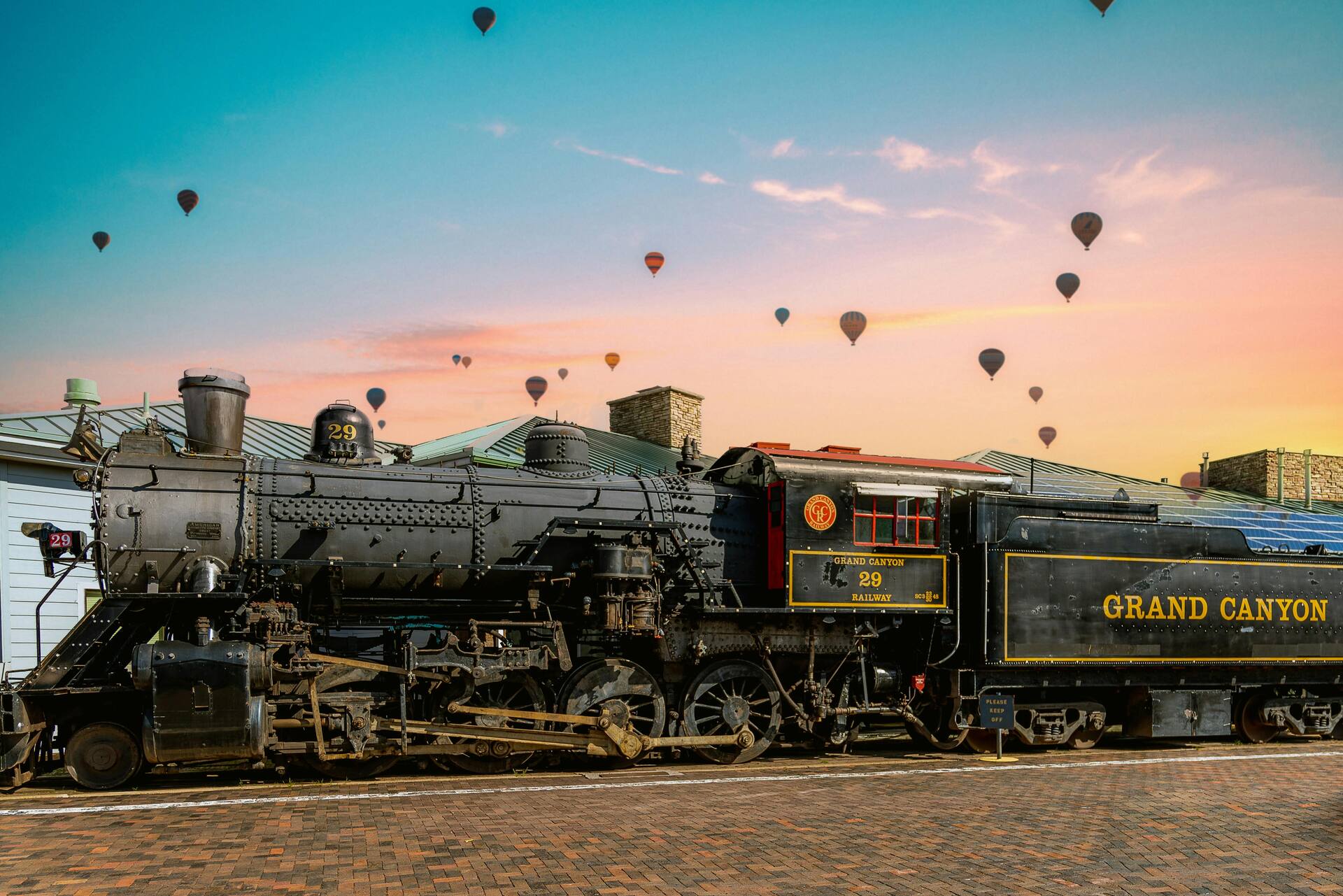
The Grand Canyon Railway runs from Williams, Arizona to the Grand Canyon South Rim — a 65-mile journey through high desert and ponderosa pine forest that takes approximately 2 hours and 15 minutes each way. The train has operated since 1901 and was the primary way visitors reached the canyon before the automobile age. Today it runs as a heritage railway with restored vintage coaches, on-board entertainment and a depot at the South Rim Village that puts you steps from El Tovar and the canyon rim.
The railway is a genuine alternative to driving — it eliminates the parking problem at the South Rim (which can be severe in summer) and the journey itself is part of the experience. Williams, the departure point, is a small town on Route 66 with hotels, restaurants and enough character to justify an overnight stay. The railway offers class options from coach to luxury dome car — the dome car gives panoramic views of the landscape but the standard coach is perfectly comfortable.
Getting there
The South Rim is approximately 280 miles north of Phoenix (4.5 hours driving) or 270 miles east of Las Vegas (4.5 hours). From Los Angeles, it is approximately 490 miles (7 to 8 hours). Many visitors combine the Grand Canyon with Las Vegas — the drive from Vegas to the South Rim passes through dramatic high desert landscape and is itself a worthwhile experience.
The Grand Canyon Railway from Williams is an alternative to driving the final stretch — Williams is on Interstate 40, roughly 30 minutes from Flagstaff, and the train delivers you directly to the South Rim Village.
The North Rim is 220 miles from Las Vegas (4 hours) but 215 miles by road from the South Rim despite being only 10 miles across the canyon. There is no bridge. Planning a visit to both rims requires either a long drive or the rim-to-rim hike.
Practical information
Entry fee: The $250 Non-Resident Annual Pass covers all national parks for one year for up to four adults (16+) and children under 16 — for most British visitors it is the only option that makes sense. See our 2026 National Park Fees page for a full breakdown.
When to go: The South Rim is open year-round. Spring (March to May) and autumn (September to November) offer the best combination of moderate temperatures and manageable crowds. Summer is extremely hot below the rim. Winter brings snow to the rim and fewer visitors — the canyon under snow is extraordinary.
Where to stay: El Tovar Hotel on the South Rim is the landmark lodge, built in 1905 and perched on the canyon edge. Bright Angel Lodge and Maswik Lodge offer more affordable options in the village. Phantom Ranch at the bottom of the canyon is allocated by lottery — apply 15 months in advance. Tusayan, the town outside the South Rim entrance, has chain hotels.
Helicopter tours: Helicopter tours operate from Tusayan (South Rim) and Las Vegas. The flights from Tusayan give 25 to 50 minutes over the canyon. They are expensive but the aerial perspective reveals the canyon's scale in a way that the rim views cannot.