National Park
Sequoia & Kings Canyon
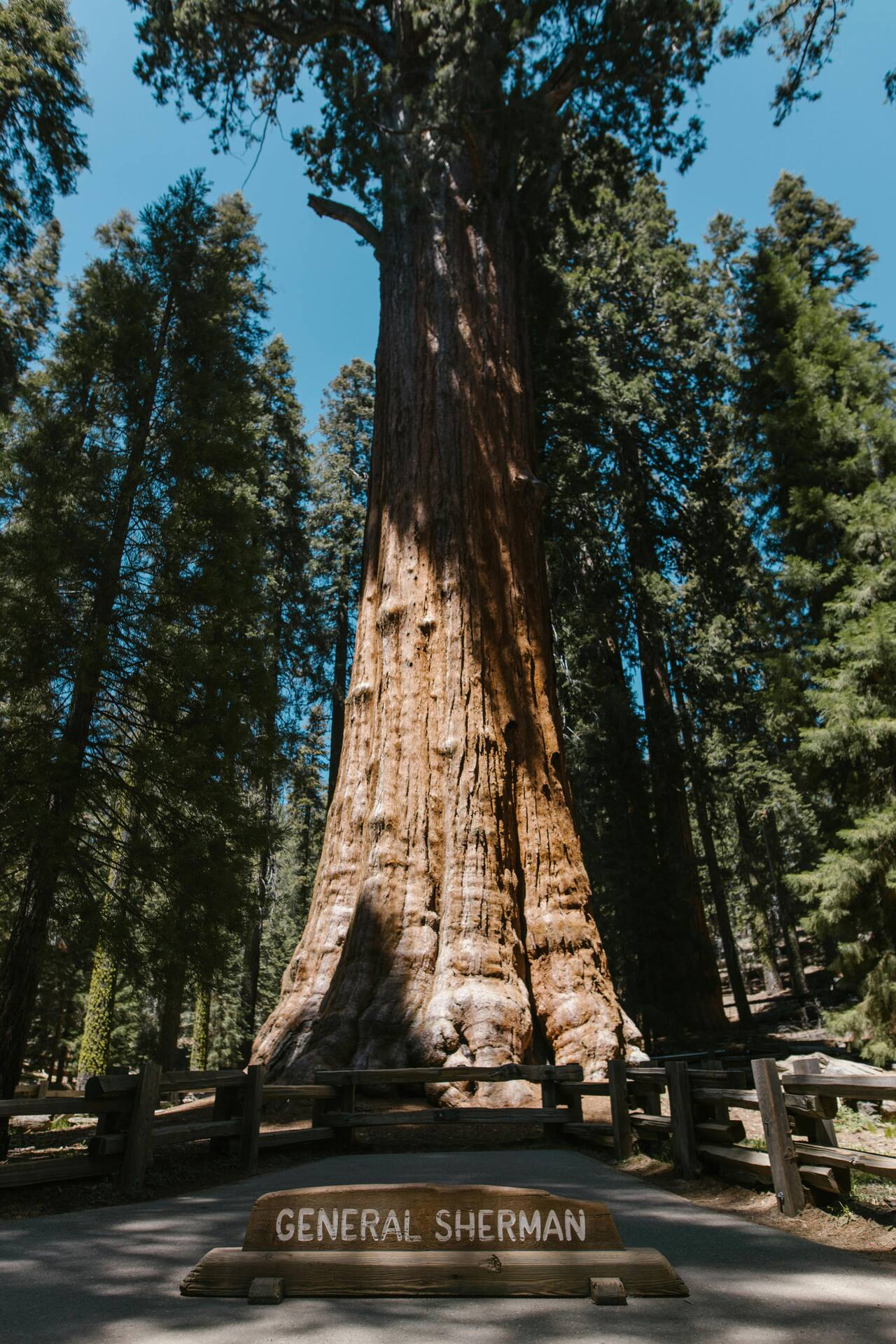
Sequoia National Park contains the largest trees on earth — not the tallest (those are the coast redwoods further north) but the most massive by volume. General Sherman, the largest living tree, stands 275 feet tall with a circumference of 102 feet at its base. Standing next to it is one of those rare experiences where the reality exceeds anything you imagined.
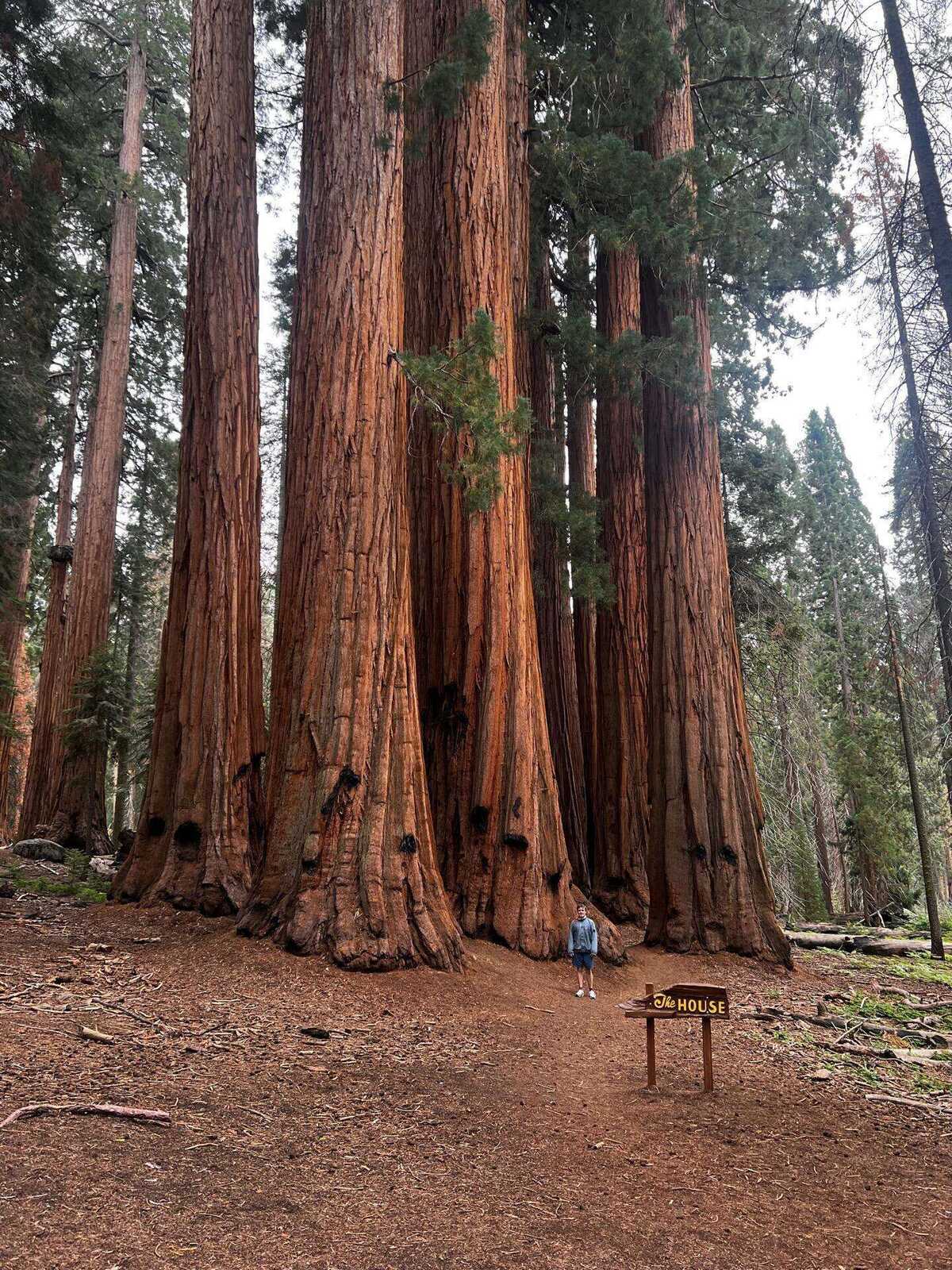
The Giant Forest
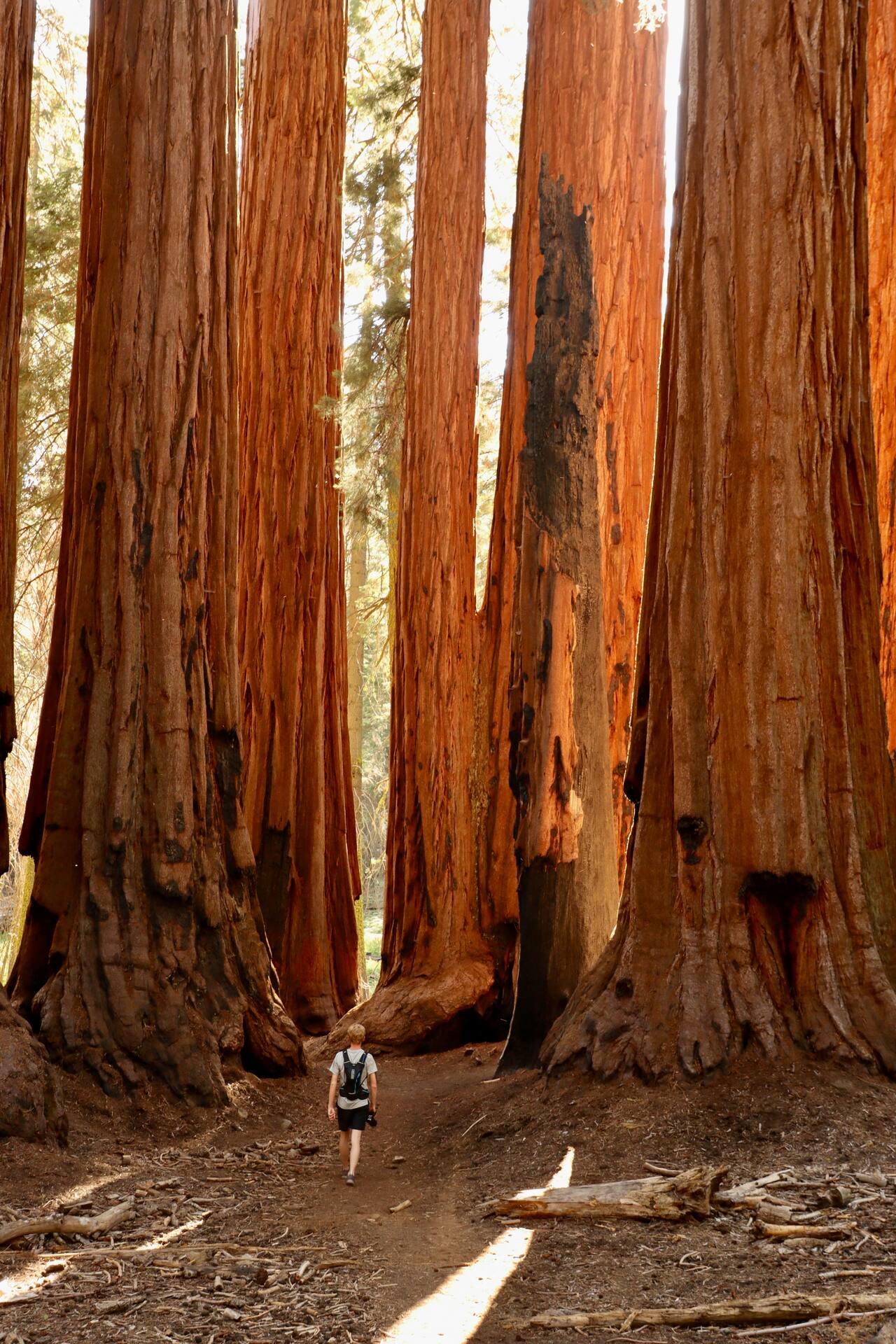
The Giant Forest is the heart of Sequoia National Park — a grove of approximately 8,000 giant sequoias spread across 1,880 acres. The trees are not just large, they are ancient — many are over 2,000 years old. Walking among them is a fundamentally different experience from looking at photographs. The scale only registers when you stand at the base of one and look up.
The Congress Trail, a two-mile paved loop from the General Sherman Tree, is the best introduction. The trail passes the President, the Senate Group and the House Group — clusters of giant sequoias named for their stature. The trail is flat and accessible. Early morning visits avoid the crowds and give the best light filtering through the canopy.
General Sherman Tree
General Sherman is the largest living tree on earth by volume — 52,500 cubic feet of wood. It is not the tallest tree, nor the widest, nor the oldest, but by total mass it is unmatched. The tree is reached by a short, steep paved trail from the Wolverton Road car park (0.8 miles round trip). A viewing platform at the base gives the full perspective.
The tree is impressive year-round but in winter, when snow covers the Giant Forest and visitor numbers drop to a fraction of summer levels, the experience of standing alone at the base of General Sherman is genuinely powerful.
Tunnel Log
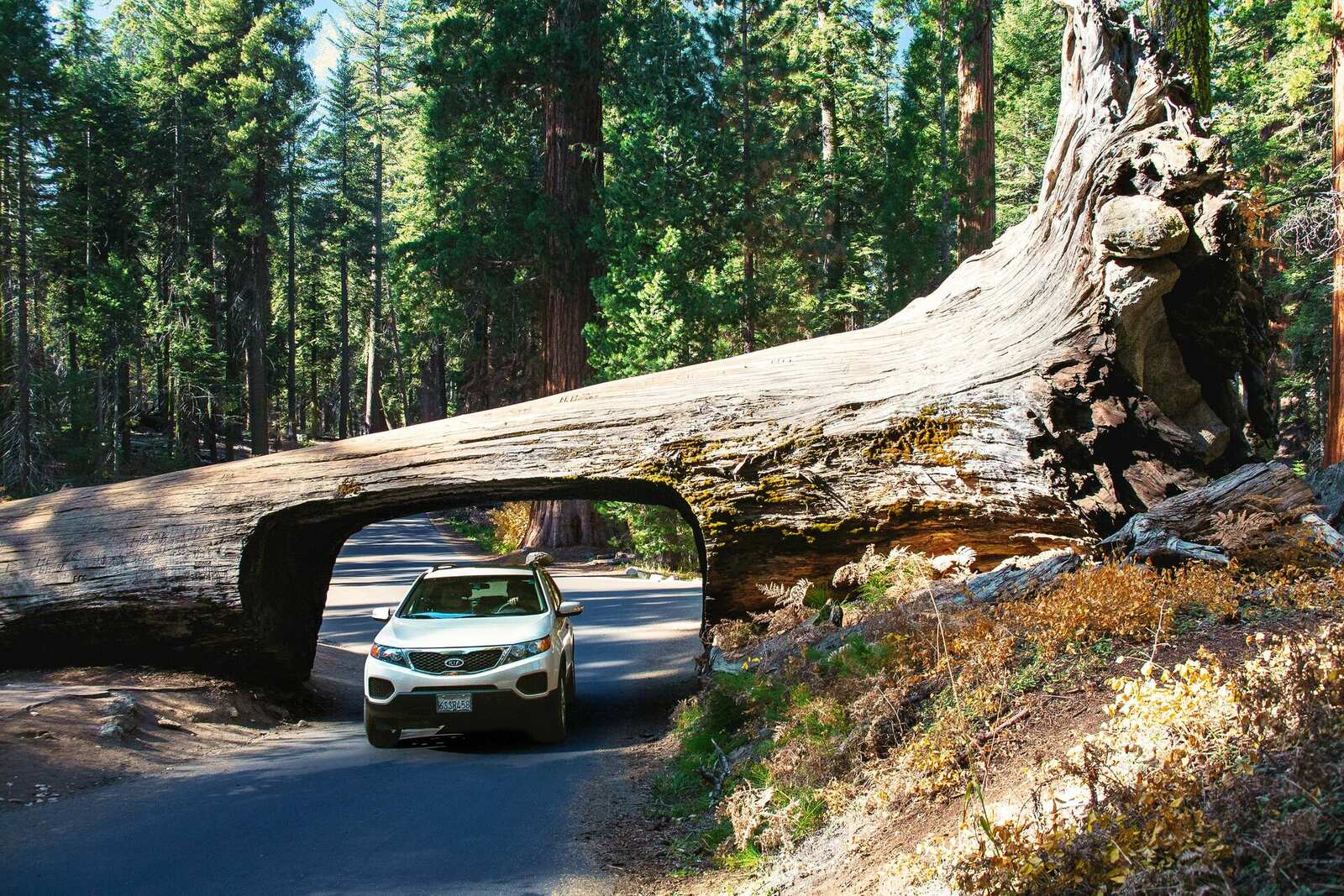
Tunnel Log is a fallen giant sequoia that has had a tunnel cut through it large enough to drive a car through. The tree fell across the road in 1937 and rather than remove it, the park service carved the tunnel the following year. It has been one of the most photographed attractions in Sequoia ever since. Standard cars and most SUVs fit through comfortably. Larger vehicles use a bypass road around it.
The log is on the Moro Rock-Crescent Meadow Road, a short drive from the Giant Forest Museum. It is a quick stop rather than a destination in itself, but driving through a fallen sequoia is one of those experiences that stays with people — especially children.
Moro Rock
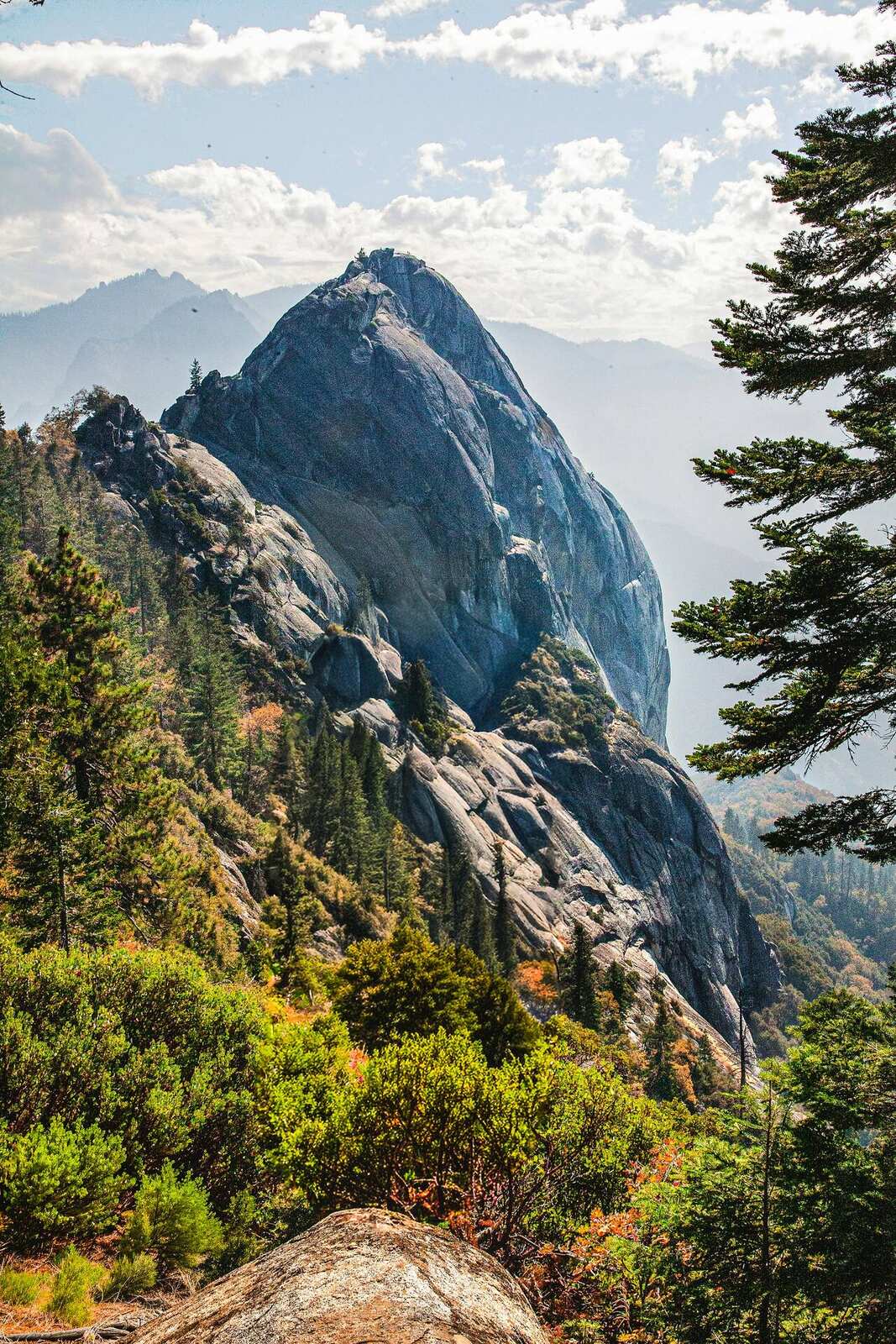
Moro Rock is a granite dome that rises above the Giant Forest with a staircase of 350 steps carved into the rock leading to a summit viewpoint. The view from the top — the Great Western Divide, the Kaweah River canyon, the San Joaquin Valley haze in the distance — is one of the finest in any national park. The staircase is narrow with handrails and exposed drops. It is not suitable for anyone uncomfortable with heights, but for everyone else it is unmissable.
The Moro Rock road is open from late May to November. The climb takes 15 to 20 minutes. Go late in the afternoon for the best light on the Great Western Divide.
Big Trees Trail
The Big Trees Trail is a gentle 1.3-mile loop around Round Meadow in the Giant Forest — flat, mostly boardwalk, and lined with some of the largest sequoias in the park. Interpretive signs along the trail explain the ecology of the sequoia groves: how the trees depend on fire to reproduce, why their bark is so thick, and how a tree that weighs over a million pounds survives on a root system only four to six feet deep.
This is the best trail for families with young children or anyone who wants to be among the big trees without a strenuous hike. The trailhead is at the Giant Forest Museum, which is itself worth a stop for the context it gives to everything else in the park.
The Generals Highway
The Generals Highway connects Sequoia and Kings Canyon National Parks — a 46-mile mountain road that winds through sequoia groves, past granite formations and along ridgelines with views into the Kaweah River canyon. The road is narrow, winding and slow, which is entirely the point. This is not a route to rush. The drive from the Ash Mountain entrance in the south to Grant Grove in the north takes about two hours without stops, but the pullouts and viewpoints along the way will double that.
The highway climbs from 1,700 feet at the southern entrance to over 6,700 feet in the Giant Forest before descending to Grant Grove. The temperature difference between the bottom and the top can be 15 to 20 degrees. The road is open year-round but chains may be required in winter. Vehicles over 22 feet are not recommended.
Kings Canyon
Kings Canyon National Park, administered jointly with Sequoia, is the wilder and less visited of the two. Kings Canyon itself — carved by glaciers and the Kings River — is one of the deepest canyons in North America at over 8,000 feet from rim to river. The Kings Canyon Scenic Byway (Highway 180) drops from the sequoia groves into the canyon and dead-ends at Roads End in Cedar Grove, a stunning drive through granite walls and old-growth forest.
Cedar Grove is the trailhead for some of the finest backcountry hiking in the Sierra Nevada, but even without hiking the drive alone justifies the visit. The Zumwalt Meadow trail (1.5 miles, flat) along the Kings River at the end of the road is one of the most peaceful walks in either park.
Practical information
Sequoia and Kings Canyon are approximately 270 miles north of Los Angeles (4.5 to 5 hours driving) or 250 miles southeast of San Francisco (4.5 hours). The parks share a single entrance fee and are connected by the Generals Highway.
Entry fee: The $250 Non-Resident Annual Pass covers all national parks for one year for up to four adults (16+) and children under 16 — for most British visitors it is the only option that makes sense. See our 2026 National Park Fees page for a full breakdown.
When to go: June to September for full access. The Generals Highway and most facilities open in late May. Kings Canyon Scenic Byway typically opens in April or May. Winter visits to the Giant Forest are possible — Wolverton Road provides access for snowshoeing among the sequoias.
Where to stay: Wuksachi Lodge inside Sequoia is the main park accommodation. John Muir Lodge in Kings Canyon is the alternative. The town of Three Rivers at the southern entrance has motels and vacation rentals. Book well ahead for summer.
Combining with Yosemite: Sequoia and Yosemite are both in the Sierra Nevada but are not directly connected by road. The drive between them is approximately 3.5 hours via Highway 99 and Highway 41. A combined trip covering both parks needs a minimum of four days.