National Park
Yellowstone National Park
Yellowstone was the world's first national park, established in 1872, and it remains one of the most extraordinary places on earth. The park sits on top of a volcanic hotspot that powers over 10,000 thermal features — more than half the world's active geysers are here. Add bison herds, grizzly bears, wolves, elk, the Grand Canyon of the Yellowstone and landscapes that look like another planet, and you have a park that justifies every mile of the journey to reach it.
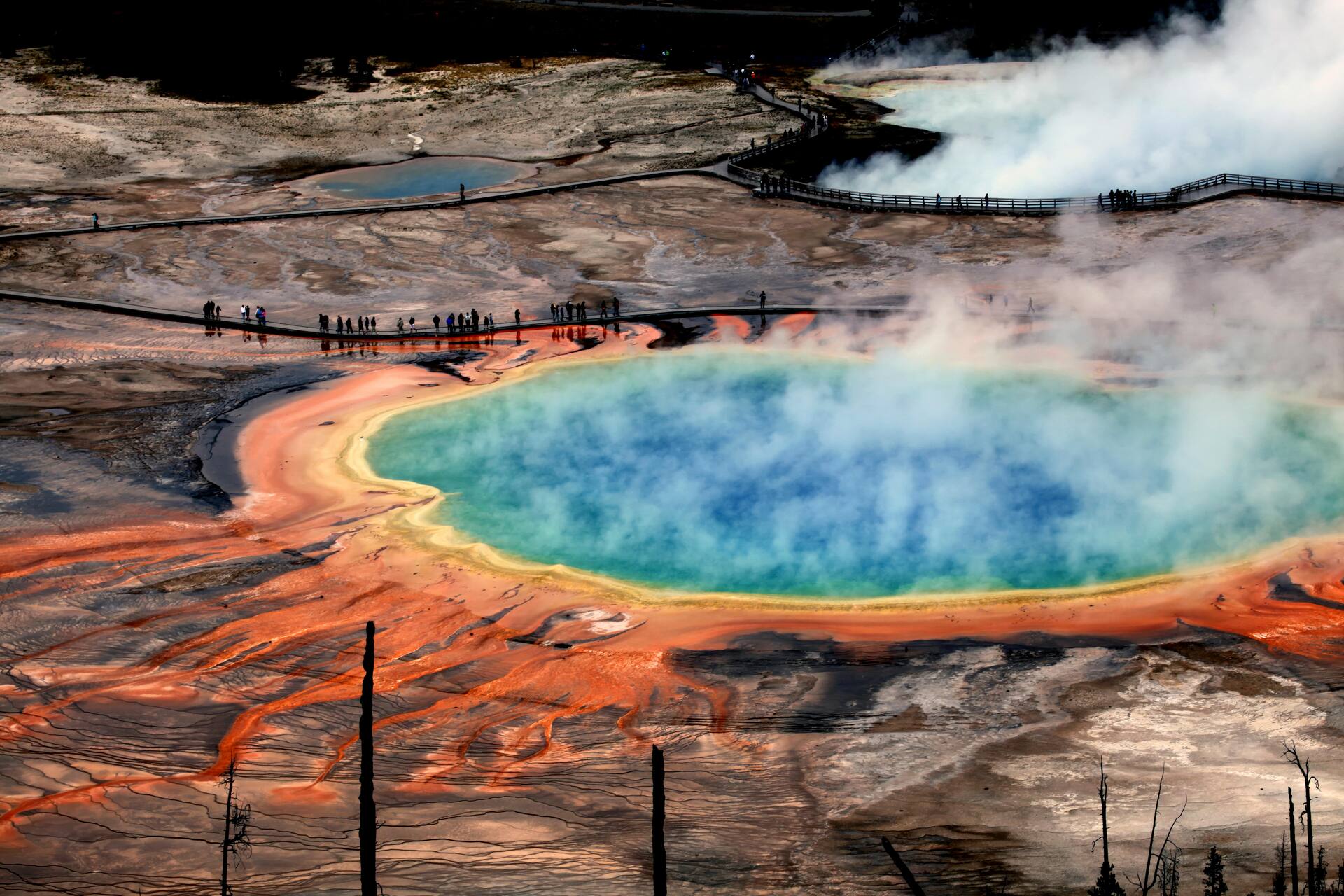
Grand Prismatic Spring
Grand Prismatic Spring is the largest hot spring in the United States and the third largest in the world — 370 feet in diameter and 160 feet deep. The spring's extraordinary rainbow colouring — deep blue at the centre fading to green, yellow, orange and red at the edges — is caused by different species of bacteria thriving at different temperatures. From the boardwalk at water level, the scale is impressive but the colours are harder to see. The Grand Prismatic Spring Overlook trail (1.6 miles round trip) gives the elevated view that reveals the full colour pattern.
Old Faithful and the Upper Geyser Basin
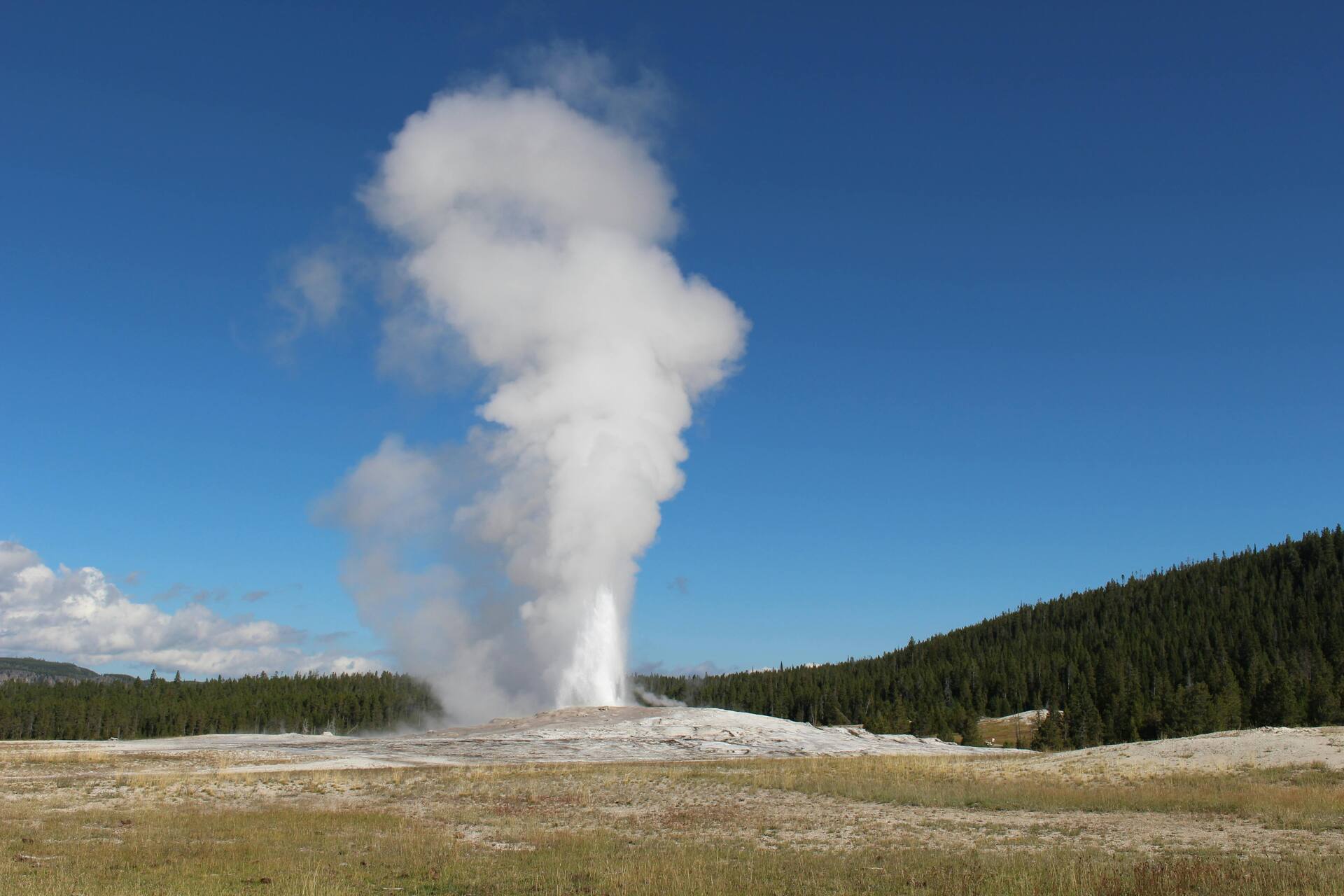
Old Faithful erupts approximately every 90 minutes, shooting 3,700 to 8,400 gallons of boiling water up to 180 feet into the air. The eruptions are predicted by park rangers with remarkable accuracy — check the visitor centre for the next predicted time and arrive 30 minutes early for a seat. The eruption lasts two to five minutes and it is genuinely spectacular every time.
Old Faithful is only one of five predictable geysers in the Upper Geyser Basin, which contains the highest concentration of geysers in the world. The boardwalk trail through the basin passes Morning Glory Pool, Castle Geyser, Grand Geyser and dozens of smaller thermal features. Allow two to three hours to walk the full loop. The colours in the pools — vivid blues, greens, oranges and yellows created by heat-loving bacteria — are not enhanced in photographs. They really look like that.
Yellowstone Falls and the Grand Canyon
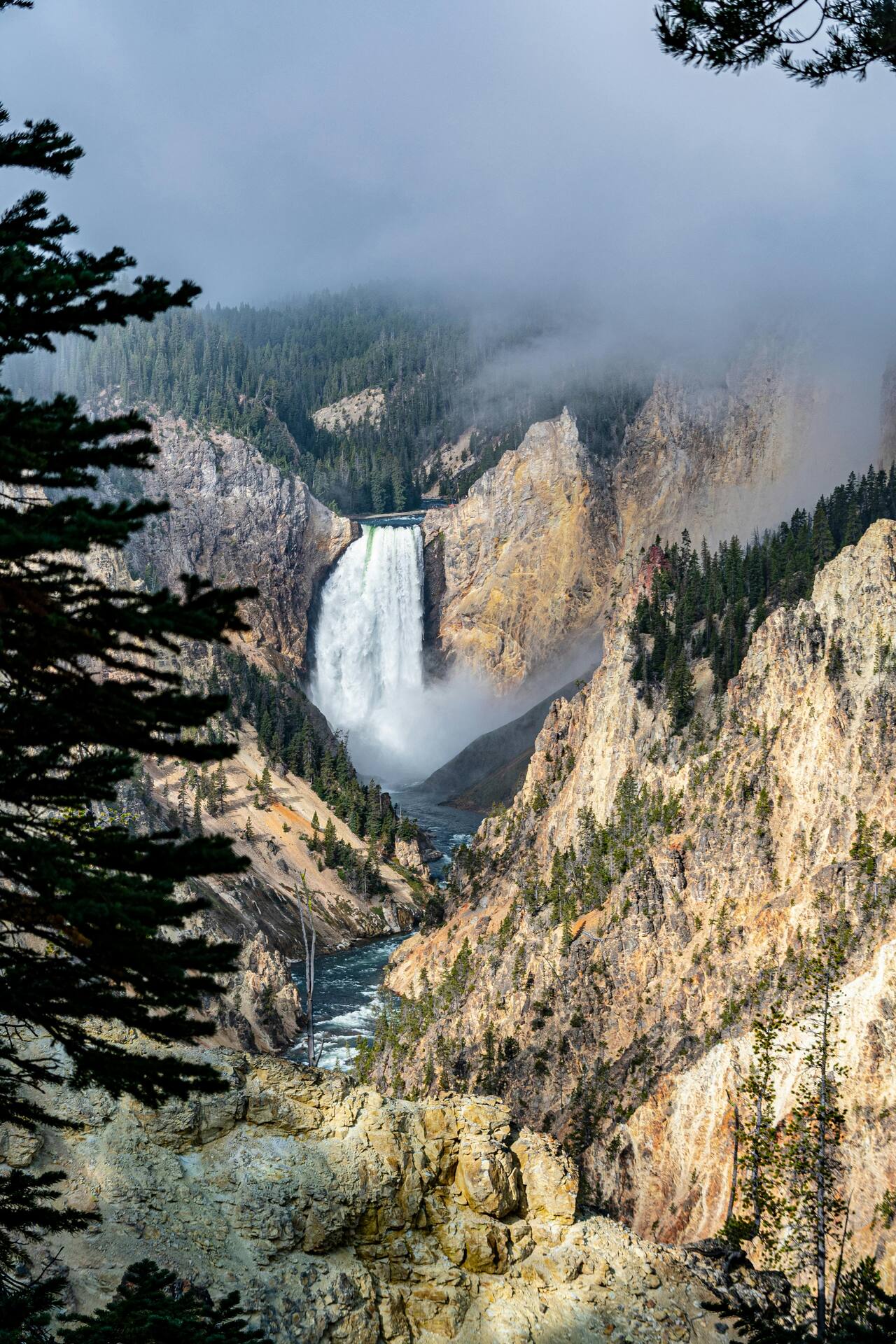
The Yellowstone River has carved a canyon up to 1,200 feet deep through yellow-tinted rhyolite rock — giving the park and the river their name. The Upper Falls (109 feet) and Lower Falls (308 feet) are the centrepieces. Artist Point, on the South Rim trail, gives the classic view of the Lower Falls with the canyon stretching into the distance. It is one of the most photographed views in any national park and it earns the attention.
Uncle Tom's Trail descends 328 steps to a platform near the base of the Lower Falls — the spray and the roar of the water at close range are overwhelming. The trail is steep and the return climb is demanding but the experience is worth it.
Wildlife
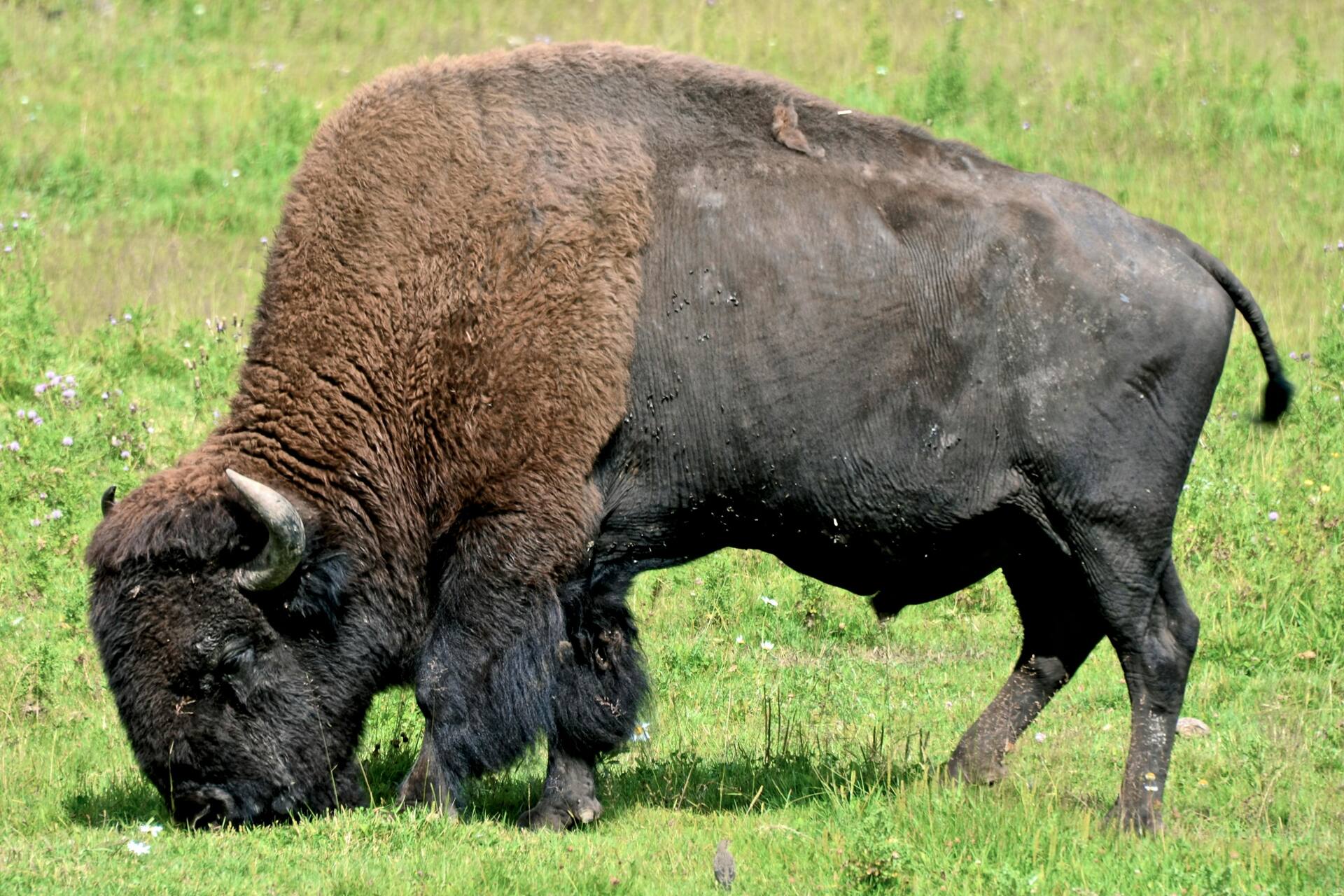
Yellowstone is the best place in the lower 48 states to see large North American mammals in the wild. Bison are everywhere — herds numbering hundreds graze in the Lamar Valley and Hayden Valley and regularly walk across roads, stopping traffic for extended periods. They are wild animals and weigh up to 2,000 pounds. Maintain at least 25 yards distance at all times.
The Lamar Valley in the northeast corner of the park is known as the Serengeti of North America. At dawn and dusk, wolves, grizzly bears, black bears, elk, pronghorn and coyotes are regularly visible from the road. Bring binoculars — the wildlife viewing in the Lamar Valley alone justifies a trip to Yellowstone. The experienced wildlife watchers set up spotting scopes at pullouts along the valley road and will often share their scopes with visitors.
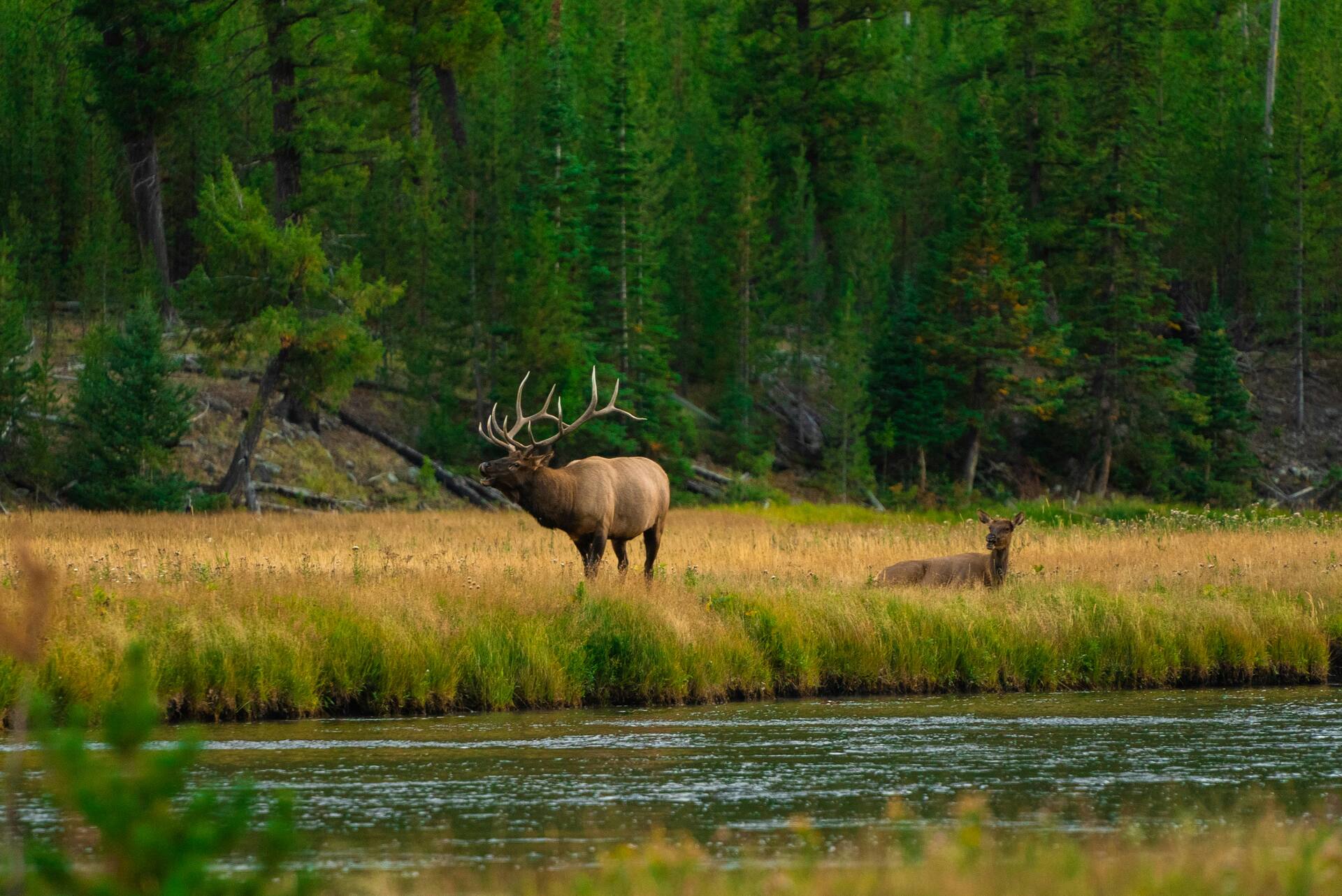
The elk rut in September and October is one of the great wildlife spectacles in any national park. Bull elk bugle across the valleys — an eerie, high-pitched call that carries for miles — and compete for harems of females. Mammoth Hot Springs and the Madison River corridor are the best areas to witness the rut. Grizzly bears are most active in spring and early summer when they emerge from hibernation, and again in autumn when they feed on spawning trout. Always carry bear spray in the backcountry and maintain 100 yards distance from bears and wolves.
Getting there
Yellowstone is not close to California. The park is in northwestern Wyoming, with small portions extending into Montana and Idaho. The nearest major airports are Bozeman, Montana (90 miles north of the park) and Jackson Hole, Wyoming (60 miles south). From Los Angeles or San Francisco, fly to Bozeman or Jackson Hole and rent a car. The drive from Salt Lake City is approximately 320 miles (5 hours).
For visitors already on a California road trip, Yellowstone combines well with a broader western US loop — fly into San Francisco, drive to Yosemite, continue to Yellowstone via Highway 395 and Salt Lake City, return via the Grand Canyon and Las Vegas. Allow at least two weeks for this circuit.
Practical information
Entry fee: The $250 Non-Resident Annual Pass covers all national parks for one year for up to four adults (16+) and children under 16 — for most British visitors it is the only option that makes sense. See our 2026 National Park Fees page for a full breakdown.
When to go: Mid-June to mid-September for full access to all roads and facilities. The park's Grand Loop Road opens in sections from late April. September offers fewer crowds, golden aspens and active wildlife — the elk rut in September is extraordinary. Winter visits (December to March) are possible via snowcoach or snowmobile only, with Old Faithful Snow Lodge as the sole winter accommodation inside the park.
Where to stay: Old Faithful Inn is the iconic park lodge — a 1904 log structure with a seven-story lobby. Book 12 to 13 months in advance for summer stays. Lake Yellowstone Hotel, Canyon Lodge and Roosevelt Lodge offer alternatives. The gateway towns of West Yellowstone (west entrance), Gardiner (north entrance) and Jackson (south, via Grand Teton) have hotels and restaurants.
How long: Three days is the minimum to see the major thermal areas, the Grand Canyon of the Yellowstone and the Lamar Valley. Five days allows a more relaxed pace with time for hiking and wildlife watching. The park's Grand Loop Road is 142 miles and the speed limit is 45mph throughout — distances take longer than you expect, and bison jams can add unpredictable delays.