Film locations
Once Upon a Time in Hollywood (2019)
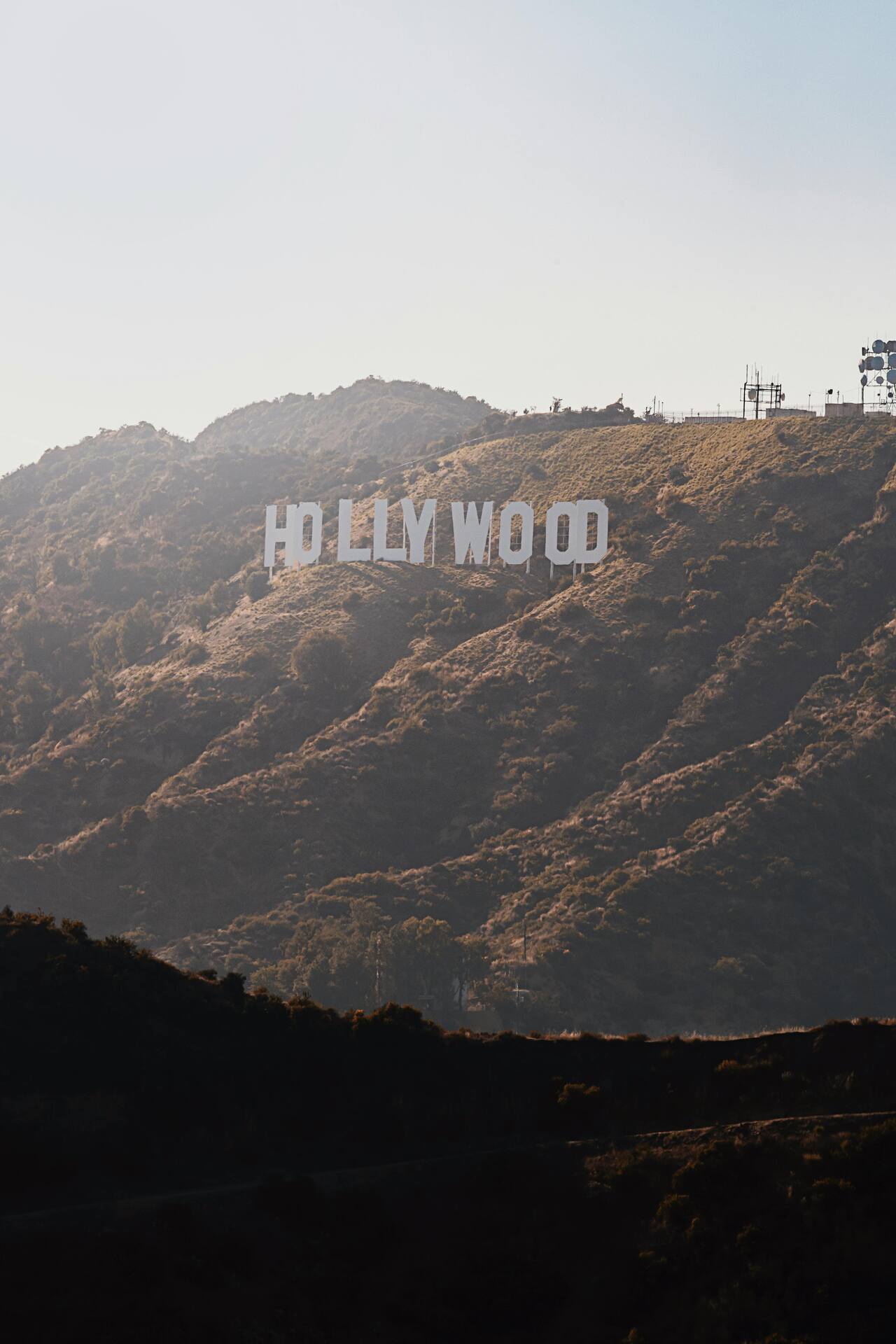
About this film
Once Upon a Time in Hollywood is Quentin Tarantino’s love letter to the Los Angeles he grew up hearing about — the late 1960s city of drive-ins, studio backlots, canyon roads and neon. The film follows Rick Dalton and Cliff Booth through a version of 1969 LA that is both meticulously researched and deeply personal. Tarantino shot on location across Hollywood, the San Fernando Valley and the canyons, and the production went to extraordinary lengths to dress real streets back to their 1969 appearance. The result is a film where the city itself is a character, and most of the locations are still findable today.
Hollywood Boulevard
The heart of the film. Tarantino dressed several blocks of Hollywood Boulevard to match 1969 — removing modern signage, adding period shopfronts and filling the streets with vintage cars. The stretch of Hollywood Boulevard between Highland and Vine is where most of this was filmed. Musso & Frank Grill at 6667 Hollywood Boulevard — the oldest restaurant in Hollywood, operating since 1919 — appears in the film as the bar where Rick Dalton drinks. It is still open, still serving the same martinis, and the red leather booths look exactly as they did in both 1969 and the film.
The Cinerama Dome on Sunset Boulevard, the distinctive geodesic concrete theatre built in 1963, is visible in the film’s backdrop. The Pantages Theatre, the Egyptian Theatre and the stretches of boulevard between them all feature. Hollywood Boulevard today is more commercial than it was in 1969 but the bones of the street — the theatres, the older buildings, the scale of it — remain.
Visiting: Musso & Frank Grill is open Tuesday to Saturday. Reservations recommended, especially at weekends. The bar is first-come-first-served and is the best place to sit for the atmosphere. Walk Hollywood Boulevard between Highland and Vine to see the theatres and the streetscape that Tarantino dressed.
Spahn Ranch
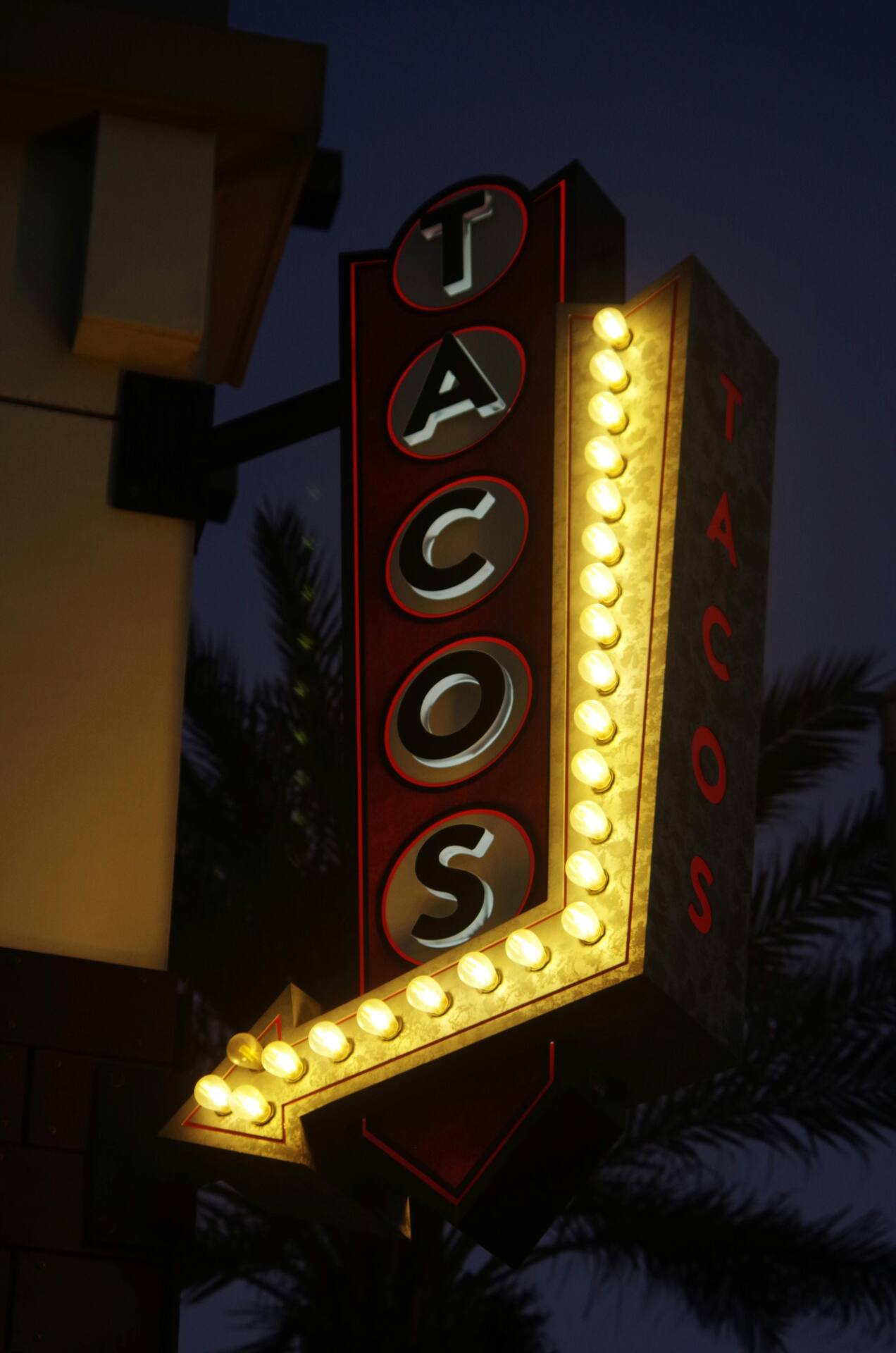
The Spahn Movie Ranch in the Santa Susana Pass above Chatsworth was where the Manson Family lived in 1969 and where Cliff Booth visits in the film. The original ranch — a working film set since the 1940s used for Westerns — was destroyed in a fire in 1970. The site was further damaged in the 2018 Woolsey Fire. Today the land is part of the Santa Susana Pass State Historic Park and there is nothing left of the ranch buildings.
The surrounding landscape, however, is exactly as the film presents it — dry, hilly, chaparral-covered terrain that feels remote despite being inside the city limits of Los Angeles. The Santa Susana Pass itself is a striking drive through the sandstone formations that separate the San Fernando Valley from Simi Valley.
Visiting: Santa Susana Pass State Historic Park is accessible from the Iverson Trailhead on Santa Susana Pass Road. The trails are exposed with no shade — bring water and go early in the morning during summer. The Spahn Ranch site itself has no markers or signage.
El Coyote Mexican Restaurant
Sharon Tate and her friends eat at El Coyote on Beverly Boulevard on the night of August 8, 1969 — both in the film and in real life. El Coyote has been at 7312 Beverly Boulevard since 1951 and it looks almost exactly as it did then. The interior is a riot of colour — painted tiles, papel picado, sombreros on the walls — and the margaritas are famous. It is one of those Los Angeles restaurants that has survived every trend by refusing to change.
The film handles the El Coyote sequence with restraint, but the restaurant’s real history gives it a weight that goes beyond the screen. This is a real place where real people ate their last meal, and visiting it is a different experience from visiting a typical film location.
Visiting: El Coyote is at 7312 Beverly Boulevard, open daily for lunch and dinner. No reservations — expect a wait at weekends. The margaritas and the combination plates are the things to order. Street parking on Beverly Boulevard or the side streets.
Westwood Village and the Fox Bruin Theatre
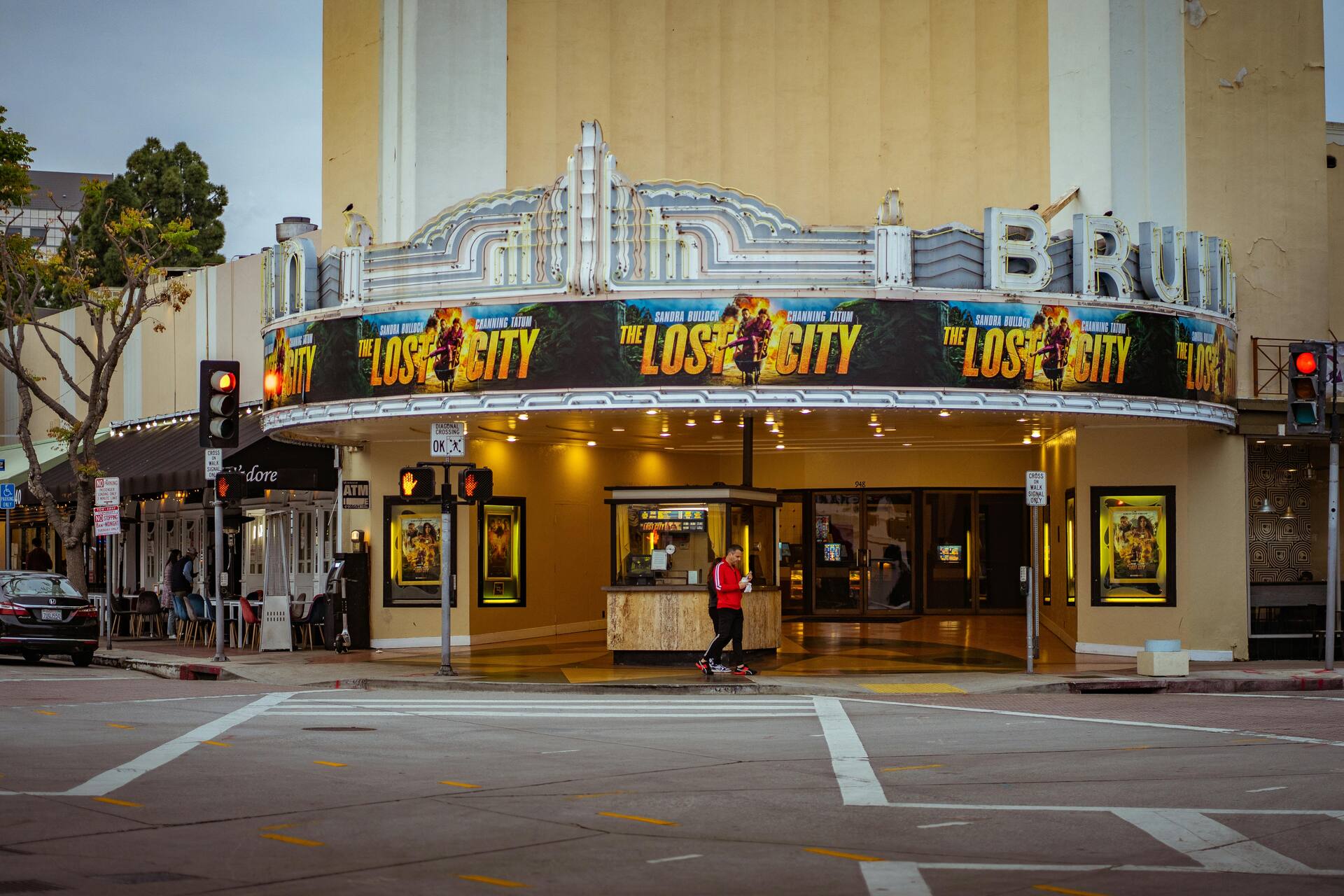
The Fox Bruin Theatre in Westwood Village hosts the premiere of Rick Dalton’s film in the movie. Westwood Village, the commercial district adjacent to UCLA, was the premiere cinema destination in Los Angeles through the 1960s and 1970s — studios held their biggest openings at the Village, Bruin and National theatres clustered along Broxton Avenue. The Fox Bruin (now the Regency Bruin Theatre) is still standing at 948 Broxton Avenue, a beautiful Art Deco single-screen cinema that still shows films.
The Regency Village Theatre across the street — the one with the distinctive white tower visible for blocks — is the larger of the two and also still operating. Between them they give Westwood Village the highest concentration of classic cinema architecture in Los Angeles.
Visiting: Both theatres are on Broxton Avenue in Westwood Village. Check listings for current screenings — seeing a film in either theatre is the best way to experience them. Westwood Village has restaurants and shops and is walkable from the UCLA campus. Parking is available in the village structures off Broxton.
Cielo Drive and Benedict Canyon
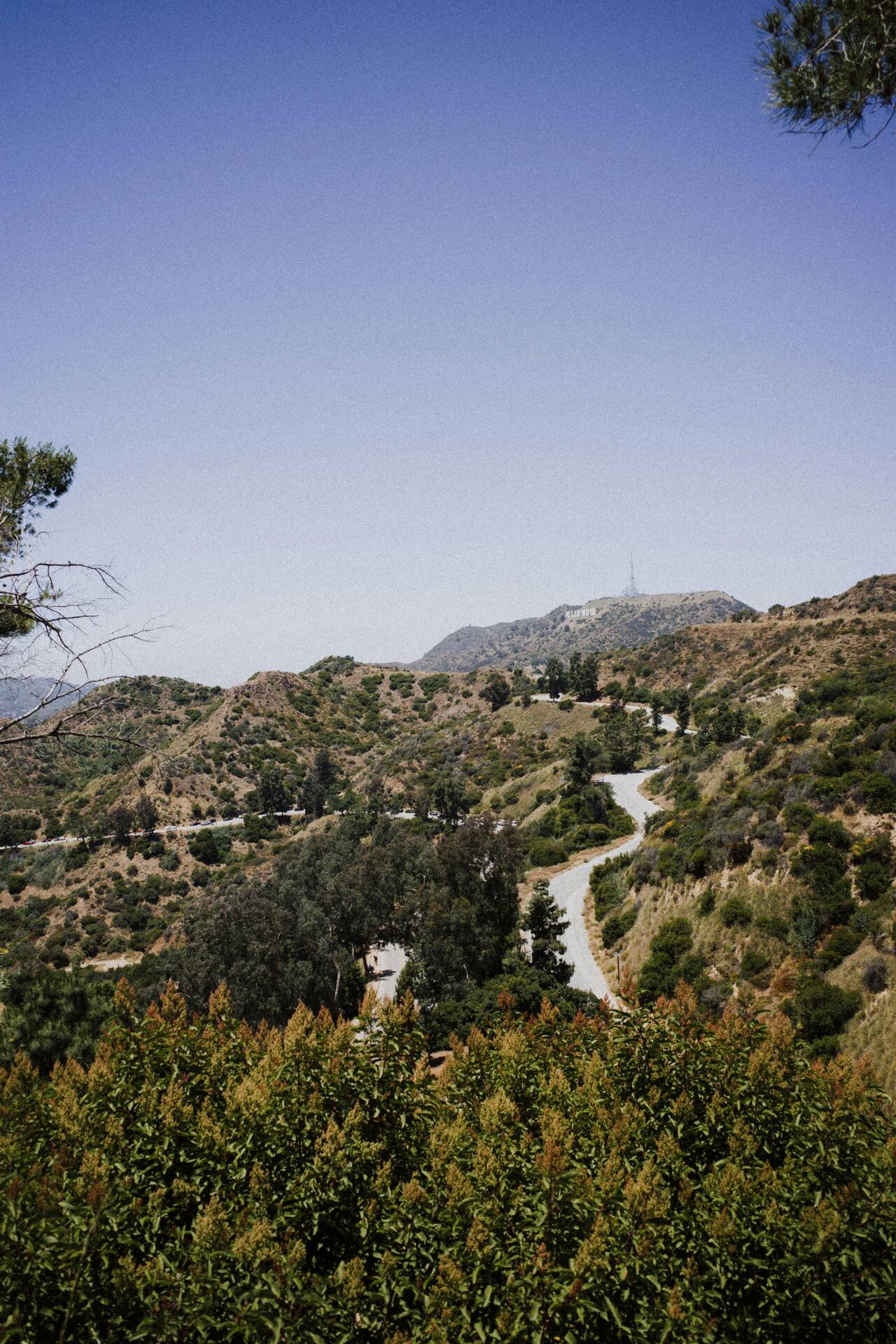
Rick Dalton lives next door to Sharon Tate and Roman Polanski on Cielo Drive in the film. The real 10050 Cielo Drive — where the Tate murders took place on August 9, 1969 — was demolished in 1994. A new house was built on the site and the address was changed to 10066 Cielo Drive. The street is a private cul-de-sac in Benedict Canyon, gated and inaccessible to visitors.
Benedict Canyon itself is one of the three major canyon roads connecting the San Fernando Valley to Beverly Hills — a winding, narrow road through dense vegetation that feels completely removed from the city. The canyon roads are part of the essential geography of Los Angeles and driving them gives a sense of why people live in the hills despite the fire risk, the landslide risk and the isolation.
Visiting: Cielo Drive is private and gated — do not attempt to visit the house. Benedict Canyon Drive is a public road and a worthwhile drive between Beverly Hills and the Valley. Coldwater Canyon and Laurel Canyon are parallel alternatives. All three are narrow, winding and best driven in daylight. The views from Mulholland Drive at the top connect to the Hollywood Hills driving experience.
Practical information
The Once Upon a Time in Hollywood locations divide into two clusters. Hollywood Boulevard, Musso & Frank and the surrounding streets are walkable in a single visit. The canyon locations, Westwood and El Coyote require a car. A full day covering both clusters is feasible — start with breakfast or lunch at Musso & Frank, walk Hollywood Boulevard, drive to Westwood Village for the theatres, continue to El Coyote for an early dinner, then drive Benedict Canyon to Mulholland Drive for sunset.
The Santa Susana Pass and Spahn Ranch site is a separate trip to the northwest corner of the San Fernando Valley — combine it with a drive through the Valley if you are interested in that part of the film, but it is not essential.